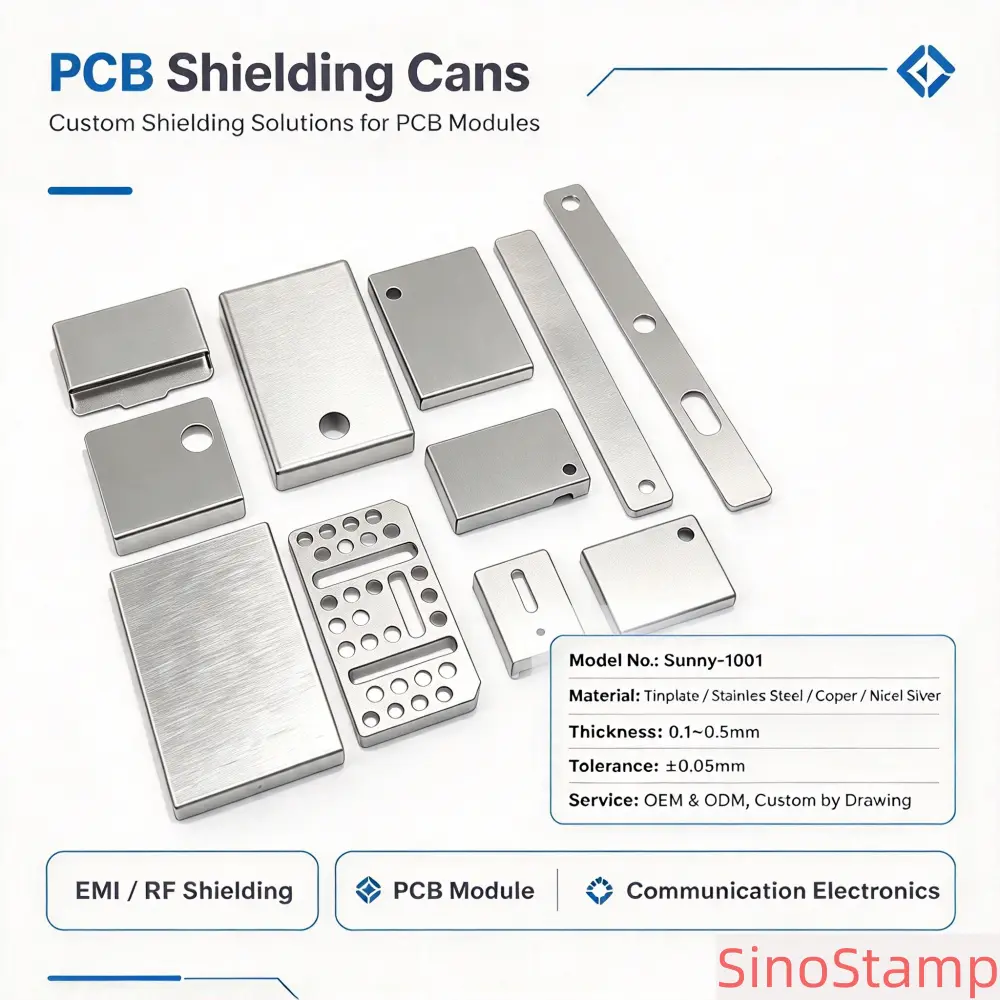
PCB Shielding Cans

  • Model No.: Sunny-1002
  • Product Name: PCB Shielding Cans
  • Material: Tinplate / Stainless Steel / Copper / Nickel Silver (Customizable)
  • Thickness: 0.1mm ~ 0.6mm (Customizable)
  • Surface Finish: Bright tin plating / Matte / Anti-tarnish treatment / Gold plating
  • Processing: Deep drawing, precision stamping, bending, forming
  • Function: EMI & RF shielding, suppress electromagnetic interference for PCB
  • Custom Service: OEM & ODM, Custom size, shape, cutout by drawing
  • Application: PCB board, WiFi, Bluetooth, RF communication modules
  • Tolerance: ±0.05mm for critical dimensions
  • Certification: RoHS, ISO9001, CE
  • Sample: Support sample testing
  • Packing: Anti-static bag + export carton
FAQS

We are a China-based metal stamping manufacturer and supplier specializing in precision metal stamping parts and custom metal components. We provide OEM manufacturing services for overseas industrial companies, equipment manufacturers, electronics brands and other B2B customers. Our team works with customers from technical review and material selection to production coordination, quality inspection and international delivery.
We manufacture a wide range of custom precision metal stamping parts, including metal brackets, clips, terminals, contact components, washers, mounting plates, retainers, shielding covers and other custom stamped metal components. Our products are made according to customer drawings, technical specifications or approved samples.
Yes. We provide OEM and ODM metal stamping services for international customers. OEM projects are based on customer drawings, designs or existing samples, while ODM projects may involve engineering discussions, material recommendations and manufacturing solutions. We work with customers to develop metal components that meet their functional, dimensional and production requirements.
Yes. We manufacture custom metal stamping parts based on customer-provided 2D drawings, 3D CAD files, technical specifications or physical samples. Our engineering team reviews the design, material, dimensions, tolerances and manufacturing requirements before providing a production proposal and quotation.
We can work with various metal materials depending on the application and production requirements. Common options include stainless steel, carbon steel, galvanized steel, aluminum, copper, brass and spring steel. Material selection depends on mechanical strength, conductivity, corrosion resistance, formability, thickness and final product performance.
Yes. We provide custom stainless steel stamping parts for industrial equipment, electronic products, electrical components and other OEM applications. Different stainless steel grades can be considered according to corrosion resistance, strength, formability and dimensional requirements. Customers can specify the required material grade in their drawings or technical documents.
Yes. We manufacture custom copper and brass stamping components for electrical and electronic applications. Typical products include electrical terminals, connector contacts, conductive components and custom metal contacts. Material selection can be discussed according to electrical conductivity, mechanical properties, plating requirements and application conditions.
Yes. We can produce custom aluminum stamping parts for industrial equipment, electronics, appliances and other applications. Aluminum alloys are selected according to the required strength, weight, formability, corrosion resistance and surface finish. We review the product design and production requirements before recommending a suitable manufacturing process.
Our metal stamping manufacturing solutions may include blanking, punching, bending, forming, drawing and progressive die stamping, depending on the component design and production requirements. We evaluate the part geometry, material thickness, dimensional tolerances and order volume to determine a suitable production process.
Progressive die stamping is a manufacturing process in which a metal strip passes through multiple stations in a stamping die to complete different operations. It is suitable for components requiring repeatable dimensions and efficient production, particularly when order volumes justify the tooling investment. The suitability of progressive stamping depends on part design, material and production quantity.
We can evaluate deep drawing projects according to the component shape, material properties, thickness and drawing depth. Deep drawn metal parts are commonly used in housings, containers, electrical components and industrial products. Please provide technical drawings or samples so we can assess the manufacturing process and tooling requirements.
Precision metal stamping focuses on achieving controlled dimensions, repeatable production quality and consistent part performance. It often involves carefully selected materials, suitable tooling, controlled manufacturing processes and dimensional inspection. The actual achievable precision depends on part geometry, material properties, thickness, tooling design and production conditions.
Yes. We can evaluate small, detailed and complex stamped metal components according to customer drawings and application requirements. The feasibility of manufacturing depends on component geometry, material thickness, tolerances, tooling design and production process. Our team reviews the design before confirming the appropriate manufacturing solution.
The minimum order quantity depends on the component design, material, tooling requirements, production process and order volume. We can evaluate small-batch and medium-volume manufacturing projects as well as recurring production orders. Please provide your drawings and estimated annual demand so we can recommend a suitable MOQ and production arrangement.
Yes. We can evaluate low-volume metal stamping projects for customers who need customized components, product development samples or initial production batches. The cost structure depends on tooling investment, setup requirements, material usage and production quantity. We can discuss practical manufacturing options based on your project budget and expected future demand.
Yes. We support sample development and prototype evaluation before regular production, depending on the part design and manufacturing process. Customers can review dimensions, material specifications, appearance and functional requirements before approving production. Tooling and sample arrangements are evaluated individually for each project.
Yes. Custom stamping tooling can be developed according to the component design and production requirements. Depending on the project, tooling options may include single-operation dies, compound dies and progressive dies. Tooling design considers part geometry, material characteristics, production volume, dimensional requirements and long-term manufacturing efficiency.
Tooling ownership and usage rights can be agreed upon in the project contract or purchase agreement. For customer-funded custom tooling, ownership, storage, maintenance, transfer conditions and permitted usage should be clearly documented before production begins. We encourage customers to confirm these terms during the quotation and project approval stages.
Tooling development time depends on part complexity, die structure, material specifications, engineering review and sample requirements. Simple tooling projects may take less time than complex progressive dies. We provide an estimated tooling schedule after reviewing the drawings and confirming the manufacturing process.
Yes. We can evaluate existing physical samples and use them as references for developing custom metal stamping components. Where necessary, customers may also provide dimensions, 2D drawings or 3D CAD files. Sample-based projects require technical review to confirm material specifications, dimensional requirements and manufacturing feasibility.
Achievable dimensional tolerances depend on material type, thickness, part geometry, tooling design, stamping process and inspection method. We review critical dimensions and tolerance requirements before confirming manufacturing feasibility. Please provide your technical drawings with clearly identified tolerances so we can evaluate the project accurately.
Yes. Surface finishing options can be arranged according to material type and application requirements. Common treatments include zinc plating, nickel plating, tin plating, chrome plating, anodizing for suitable aluminum parts, powder coating, polishing and passivation for suitable stainless steel components. The final process is selected according to appearance, corrosion resistance and functional requirements.
Yes. Nickel, zinc and tin plating can be considered for suitable metal stamping components. These finishes are commonly used to improve corrosion resistance, surface appearance or electrical contact performance. Plating specifications, coating thickness, material compatibility and testing requirements should be confirmed before production.
Quality control involves reviewing technical drawings, checking incoming materials, monitoring production processes and inspecting finished components. Depending on project requirements, inspection may include dimensional measurements, visual checks, material verification, functional testing and surface finish evaluation. Inspection criteria are agreed upon before production to ensure consistent product quality.
Inspection reports and material certificates can be provided according to project requirements and document availability. Depending on the order, documentation may include dimensional inspection reports, material certificates, surface treatment records and other agreed quality documents. Please specify your documentation requirements when requesting a quotation.
We can review customer quality requirements and applicable industry standards before accepting a project. Manufacturing procedures, inspection criteria and documentation can be discussed according to the product application and customer specifications. If specific certifications or quality management systems are required, please confirm them before project approval so their availability can be verified.
Automotive-related documentation requirements can be reviewed on a project-by-project basis. Depending on the manufacturing arrangement and available quality systems, documentation may include dimensional results, material records, process information and PPAP-related documents. Please share your required PPAP level and customer-specific requirements for evaluation before placing an order.
Yes. We can evaluate custom EMI shielding covers, PCB shielding cans, electronic brackets, conductive contacts and other stamped metal components for electronic applications. Material, dimensions, shielding design, surface treatment and assembly requirements should be specified in the technical drawings or project documents.
Yes. We provide custom manufacturing solutions for electrical terminals, copper contacts, brass connectors, conductive clips and other electrical stamping components. Projects can be evaluated according to electrical conductivity, material grade, thickness, contact geometry, plating requirements and mechanical performance.
Yes. We manufacture custom metal brackets, mounting plates, clips, retainers and support components for industrial equipment, electronics, appliances and other OEM applications. Products can be developed according to customer drawings, material requirements, dimensions, hole positions, bending angles and surface finishing specifications.
The quotation for custom metal stamping parts is based on several factors, including material type, material thickness, component dimensions, tooling investment, manufacturing process, surface treatment, inspection requirements and order quantity. Providing complete technical drawings and estimated annual demand helps us prepare a more accurate quotation.
To prepare a quotation, please provide 2D drawings or 3D CAD files, material specifications, material thickness, dimensional tolerances, surface finishing requirements, estimated order quantity and annual demand. Reference samples, application details and inspection requirements are also helpful for evaluating manufacturing feasibility and total project cost.
Production lead time depends on tooling availability, material sourcing, order quantity, production scheduling and surface treatment requirements. New projects involving custom die development generally require additional time for engineering, tooling and sample approval. We confirm the estimated schedule after reviewing the project specifications and order requirements.
Yes. We welcome long-term OEM manufacturing partnerships and recurring orders. For repeat production, we work according to approved drawings, material specifications, inspection criteria and agreed production requirements. Customers can discuss annual forecasts, scheduled releases, safety stock arrangements and repeat-order planning with our team.
We provide international supply solutions for overseas B2B customers, including buyers in North America and Europe. Export arrangements can be discussed according to order quantity, packaging requirements, destination, shipping method and agreed Incoterms. Customers can provide their delivery address and preferred shipping terms when requesting a quotation.
International orders can be shipped by express courier, air freight or sea freight, depending on shipment size, delivery schedule, destination and transportation cost. We can discuss suitable shipping arrangements and export packaging requirements during order confirmation. Shipping terms and responsibilities are agreed upon before dispatch.
Packaging is selected according to component dimensions, material, surface finish, weight and transportation requirements. Options may include plastic bags, trays, dividers, cartons and protective packaging to reduce scratching, deformation and damage during transportation. Special packaging and labeling requirements can be discussed before production and shipment.
Yes. We understand that customer drawings, product designs and technical information are confidential business assets. An NDA can be reviewed and signed before technical documents are shared, subject to mutual agreement. We recommend clearly defining confidentiality obligations, permitted use of information and intellectual property ownership in the agreement.
Working with a qualified China metal stamping manufacturer can provide access to established metalworking supply chains, material sourcing options, tooling resources and flexible production arrangements. Overseas OEM buyers can benefit from integrated manufacturing support, competitive production costs and customized components. The right supplier should be evaluated based on technical capability, quality control, communication, delivery performance and total sourcing cost.
To start a project, please send us your product drawings, 3D CAD files or reference samples, together with material specifications, required quantities and target delivery schedule. Our team will review the technical requirements, assess manufacturing feasibility and prepare a quotation. After project approval, we can proceed with tooling development, sample production, inspection and mass production according to the agreed specifications.