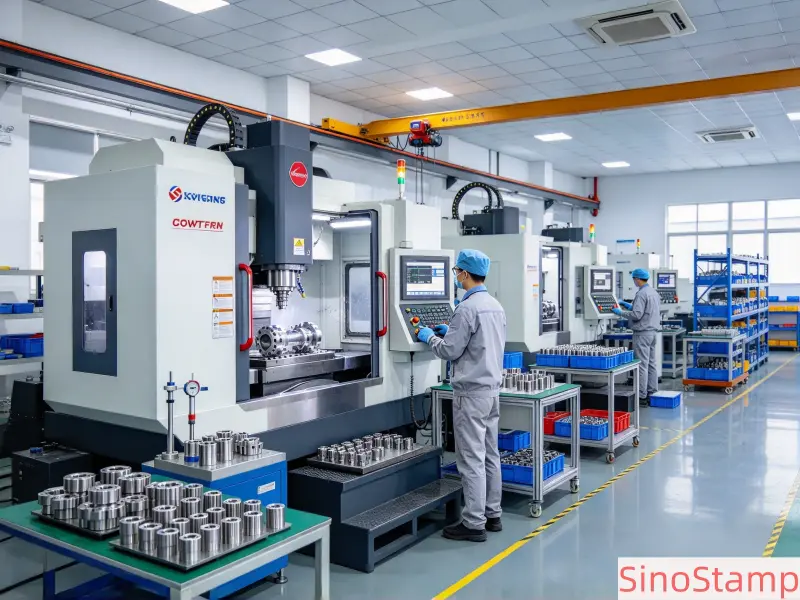
Home Appliance Metal Stamping Parts Manufacturer in China
Home appliance manufacturers depend on precision metal components to support product structure, secure internal assemblies, improve mechanical stability, and maintain consistent production quality. From washing machines and refrigerators to air conditioners, kitchen appliances, and small household electrical products, stamped metal parts are widely used throughout modern appliance manufacturing. These components may be relatively small compared with the complete appliance, but their dimensional accuracy, material strength, surface quality, and assembly compatibility can directly influence the reliability and manufacturing efficiency of the final product.
SinoStamp is a China-based supplier of custom home appliance metal stamping parts for OEM manufacturers, component distributors, and industrial equipment companies. We provide customized metal stamping solutions based on customer drawings, samples, technical specifications, and application requirements. Our product range includes appliance mounting brackets, metal frames, internal support plates, motor mounting components, and metal fastening clips. We support projects involving different metal materials, thicknesses, geometries, forming requirements, and surface finishing specifications.
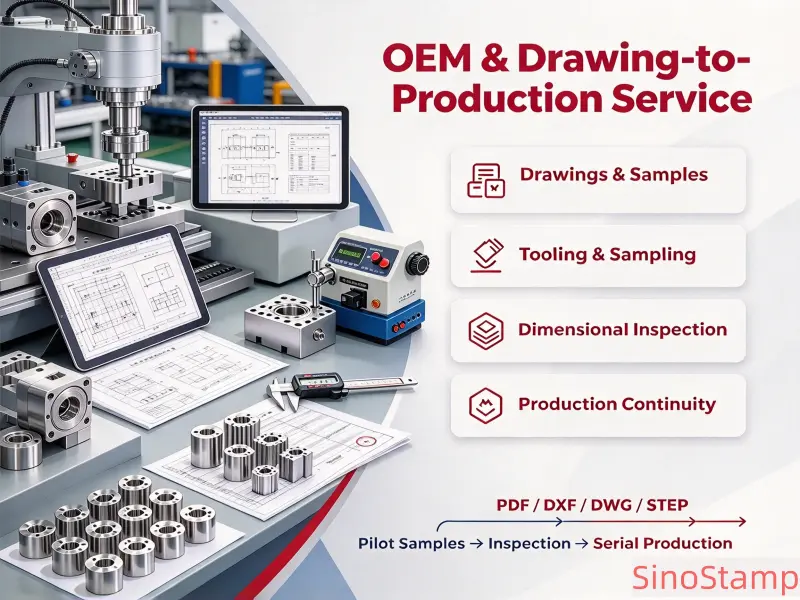
As an OEM metal stamping supplier, we understand that appliance manufacturers need more than a supplier capable of producing individual metal parts. They need a manufacturing partner that can understand engineering drawings, evaluate production feasibility, develop suitable tooling, maintain dimensional consistency, and support repeat orders over the product lifecycle. Our approach focuses on practical manufacturing coordination, production quality, and long-term supply requirements for B2B customers.
Whether you are developing a new appliance model, replacing an existing component supplier, or sourcing custom stamped parts for an established production line, SinoStamp can review your requirements and provide manufacturing solutions based on your application and order specifications.
Custom Home Appliance Metal Stamping Solutions for OEM Manufacturers
Home appliance metal stamping is a manufacturing process used to produce metal components through cutting, punching, bending, forming, and other operations. Depending on the part design and production volume, components may be manufactured using progressive dies, compound dies, or multiple-stage stamping processes. These methods allow manufacturers to produce repeatable metal components with controlled dimensions and consistent shapes.
In appliance production, stamped metal parts are used for structural support, component positioning, motor installation, electrical assembly protection, fastening, and mechanical connection. Different applications require different material properties and manufacturing approaches. A bracket supporting a motor, for example, may require adequate stiffness and accurate mounting-hole positions, while a fastening clip may need controlled elasticity and reliable retention force.
SinoStamp works with OEM customers to understand the functional requirements of each component before recommending a production approach. Important considerations include material grade, sheet thickness, part geometry, dimensional tolerances, forming direction, hole locations, surface treatment, assembly conditions, and expected production quantities.
Our custom manufacturing services can support:
- Custom metal stamping based on 2D engineering drawings.
- Production based on customer-supplied samples or reference components.
- Custom bracket, frame, support plate, and clip manufacturing.
- Sheet metal cutting, punching, bending, and forming operations.
- Tooling and stamping die development for customized components.
- Surface finishing and corrosion protection according to project requirements.
- Dimensional inspection and production quality control.
- Prototype and initial production coordination, subject to project feasibility.
- Repeat production support for long-term OEM supply programs.
Our objective is to help customers obtain metal components that meet their technical requirements while maintaining a practical balance between tooling investment, production efficiency, component quality, and total purchasing cost.
Our Home Appliance Metal Stamping Products
Our home appliance metal component range covers several important product categories used in household electrical equipment. Each category serves a different mechanical or structural function and may require different material grades, thicknesses, forming methods, and finishing processes. The following sections introduce the main product types that can be customized for OEM applications.
1. Appliance Mounting Brackets
Appliance mounting brackets are widely used to secure components, connect assemblies, and support mechanical structures inside household appliances. They are commonly found in refrigerators, washing machines, dishwashers, air conditioners, ovens, microwave ovens, and other electrical household products. Depending on the design, a mounting bracket may be used to fix a motor, attach an internal panel, support a control component, or connect two structural sections.
Custom appliance mounting brackets are generally manufactured through punching, cutting, bending, and forming processes. Some designs require multiple mounting holes, slots, positioning features, embossed sections, or special bends to achieve accurate installation. The bracket geometry must be compatible with the surrounding components and the final assembly process.
For OEM manufacturers, bracket dimensional consistency is particularly important. Differences in hole positions, bend angles, flatness, or overall dimensions may cause assembly difficulties or require additional adjustment during production. A well-designed stamping process can help maintain repeatability and reduce unnecessary assembly work.
SinoStamp can manufacture custom appliance mounting brackets based on customer drawings and application requirements. Depending on the component design, we can evaluate material thickness, bending geometry, hole specifications, edge conditions, and surface treatment before production.
Typical applications include:
- Motor mounting brackets for washing machines and air conditioning units.
- Compressor support brackets for refrigeration equipment.
- Internal equipment mounting brackets for ovens and microwave ovens.
- Control panel mounting brackets for household electrical products.
- Structural connection brackets for appliance housings and internal assemblies.
- Mounting supports for pumps, fans, and other mechanical components.
Depending on the application, mounting brackets can be produced from cold-rolled steel, galvanized steel, stainless steel, aluminum, or other suitable sheet metal materials. Material selection should consider load requirements, operating environment, corrosion exposure, forming complexity, and the customer's cost target.
2. Metal Frames for Home Appliances
Metal frames are structural components used to support appliance assemblies, maintain component positioning, and provide mechanical stability. They may be designed as internal support structures, equipment mounting frames, panel frames, reinforcement frames, or connecting structures within larger appliance assemblies.
Compared with simple brackets, metal frames often involve more complex geometries and multiple connection points. Their designs may include punched holes, mounting slots, flanges, formed edges, reinforcement sections, and connecting features. Depending on the product architecture, a frame may be produced as a single stamped component or as part of a multi-component metal assembly.
Dimensional accuracy is an important factor in metal frame manufacturing. Overall length and width, hole-to-hole distance, perpendicularity, flatness, and formed geometry can affect the installation of other components. When frames are used in automated or semi-automated assembly lines, consistent dimensions can also improve production efficiency.
SinoStamp supports custom metal frame manufacturing according to customer specifications. We can review the drawing structure, material requirements, thickness, forming operations, and critical dimensions to identify practical production considerations.
Common applications include:
- Internal structural frames for refrigerators and freezers.
- Support frames for washing machine assemblies.
- Metal frames for air conditioner internal structures.
- Oven and microwave oven support frames.
- Appliance panel reinforcement frames.
- Mounting frames for pumps, fans, motors, and control assemblies.
For frame components with several bends or mounting features, tooling design and process planning should be evaluated carefully. The sequence of punching, bending, and forming operations may influence dimensional stability and production consistency. For larger or more complex designs, prototype evaluation may be useful before committing to full production tooling.
3. Internal Support Plates
Internal support plates are metal components used to reinforce appliance structures, provide mounting surfaces, distribute loads, and maintain the position of internal assemblies. They are often installed inside appliance housings, behind panels, or between structural sections. Although these components may not be visible to end users, they play an important role in the mechanical construction of household electrical products.
Typical support plate designs include flat plates with punched holes, formed plates with raised sections, reinforcement plates with mounting slots, and shaped components with multiple bends. Some designs require accurate positioning features to ensure that motors, electrical components, brackets, or other assemblies can be installed correctly.
When manufacturing internal support plates, several technical factors should be considered. These include sheet thickness, flatness, hole diameter, hole position, edge quality, burr direction, and the relationship between the stamped features and the final assembly. For components exposed to vibration or mechanical loads, material strength and structural stiffness may also need to be evaluated.
SinoStamp can manufacture custom internal support plates based on OEM drawings, samples, and material specifications. We work with customers to understand the intended function of the component and the required production characteristics.
Typical applications include:
- Internal reinforcement plates for washing machines.
- Support plates for refrigerator and freezer assemblies.
- Mounting plates for air conditioner components.
- Internal plates for ovens and cooking appliances.
- Support plates for control units and electrical assemblies.
- Reinforcement components for appliance housings and structural panels.
For customers purchasing support plates in recurring production batches, stable tooling conditions and consistent material specifications are important. Maintaining these factors helps reduce dimensional variation and supports more predictable assembly performance over time.
4. Motor Mounting Components
Motor mounting components are used to position and secure electric motors inside household appliances. They are commonly found in washing machines, dryers, refrigerators, air conditioners, ventilation equipment, kitchen appliances, and other products containing motor-driven assemblies.
These components may include motor mounting brackets, support plates, mounting bases, reinforcement pieces, and specially formed metal holders. Their designs vary depending on motor dimensions, mounting-hole patterns, installation direction, operating loads, and the surrounding appliance structure.
Motor mounting components require particular attention to dimensional accuracy and structural stability. Incorrect mounting-hole locations or inconsistent formed angles can make motor installation difficult. In some applications, vibration and repeated operating loads may also influence the required stiffness and strength of the supporting metal component.
SinoStamp can produce custom motor mounting components according to customer drawings and specifications. We can evaluate material selection, sheet thickness, mounting-hole patterns, bend geometry, and surface treatment based on the intended application.
Typical applications include:
- Motor brackets for washing machines and dryers.
- Fan motor mounting supports for air conditioning systems.
- Motor support plates for ventilation equipment.
- Mounting bases for small household appliance motors.
- Structural supports for pump and motor assemblies.
- Reinforcement components for motor installation structures.
For motor-related components, customers should provide the motor mounting drawing or the relevant interface dimensions whenever possible. Information about expected loads, vibration conditions, installation orientation, and operating environment can also help determine suitable material and structural requirements.
5. Metal Fastening Clips
Metal fastening clips are small stamped components used to hold, retain, position, or connect parts inside household appliances. They may be used to secure panels, retain wiring or tubing, hold insulation materials, connect internal components, or provide quick mechanical fastening during assembly.
Compared with larger structural brackets, fastening clips often have smaller dimensions and more specific forming requirements. Their functional performance may depend on spring characteristics, material thickness, bend geometry, opening dimensions, and the amount of retention force required by the application.
Some fastening clips are designed for repeated installation and removal, while others are intended for permanent positioning during appliance assembly. The design should therefore be evaluated according to the intended installation method and service conditions.
SinoStamp supports custom metal fastening clip production based on drawings, samples, and application requirements. Depending on the design, manufacturing operations may include precision blanking, punching, bending, forming, and surface finishing.
Typical applications include:
- Panel retaining clips for household appliances.
- Wiring and cable fixing clips.
- Pipe and tube retaining clips.
- Internal component positioning clips.
- Insulation and protective material fastening clips.
- Small metal spring clips for appliance assemblies.
For spring-type clips, material properties and forming conditions are especially important. Customers should specify the required opening size, retention function, installation method, and any relevant force requirements. Functional testing may be appropriate when clip performance is critical to the final assembly.
Materials for Home Appliance Metal Stamping Parts
Material selection has a direct influence on the strength, corrosion resistance, formability, dimensional stability, and cost of home appliance metal stamping parts. Different appliance applications require different material characteristics. A structural bracket may prioritize stiffness and load-bearing capacity, while a fastening clip may require suitable elasticity and forming performance.
SinoStamp can evaluate material options according to customer drawings, technical specifications, and intended applications. The final material should be confirmed against the customer's approved requirements and, where necessary, relevant material standards.
Cold-Rolled Steel
Cold-rolled steel is commonly used for appliance brackets, support plates, internal frames, and other structural metal components. It offers a smooth surface, consistent thickness, and suitable forming characteristics for many stamping applications. It can be used for components that require punching, bending, and general structural support.
For OEM projects, customers should specify the required steel grade, thickness tolerance, mechanical properties, and any surface treatment requirements. The material selection should be compatible with the part geometry and the intended manufacturing process.
Galvanized Steel
Galvanized steel features a zinc coating that provides additional corrosion protection compared with untreated carbon steel. It is used in various appliance components where improved resistance to environmental exposure is required.
Galvanized steel may be suitable for selected brackets, internal support components, and structural parts. However, forming operations should be evaluated to ensure that the coating remains suitable after punching and bending. Edge protection and post-processing requirements should also be considered where corrosion resistance is critical.
Stainless Steel
Stainless steel is used when corrosion resistance, appearance, or specific mechanical properties are important. Depending on the grade, it may be suitable for clips, brackets, support plates, and components used in humid or chemically exposed environments.
Stainless steel grades have different forming characteristics, strength levels, and corrosion resistance. The appropriate grade should be selected according to the operating environment and component function rather than relying on the general term stainless steel alone.
Aluminum
Aluminum offers low weight and good corrosion resistance for suitable applications. It can be used for selected brackets, support plates, frames, and other components where weight reduction is important.
Different aluminum alloys have different strength and forming characteristics. Customers should confirm the required alloy and temper where these details affect product performance. For parts involving complex bending or forming, material selection should be reviewed alongside the component geometry.
Copper and Other Specialized Materials
Some household electrical appliances contain metal components that require electrical conductivity or specific contact characteristics. Copper and copper alloys may be suitable for selected electrical connection or contact-related applications. Other specialized materials can also be evaluated when the design requires particular mechanical, thermal, or electrical properties.
Material availability, minimum purchasing quantities, and processing requirements may influence the final production plan. For this reason, early confirmation of the material specification is recommended before tooling and mass production decisions are finalized.
Precision Manufacturing Processes for Appliance Metal Components
Home appliance metal stamping parts can involve different manufacturing operations depending on the geometry, tolerance requirements, and production volume. A suitable process plan helps control component dimensions, reduce unnecessary operations, and maintain consistent production quality.
Blanking and Cutting
Blanking and cutting operations separate the required component shape from sheet metal. The cutting layout and material utilization should be considered during process planning. For parts with relatively simple profiles, an efficient blanking process can help reduce material waste and support stable production.
Punching and Hole Making
Punching is used to create mounting holes, slots, openings, and other features required for assembly. Hole diameter, position, spacing, and edge quality can be important for the installation of screws, bolts, rivets, and other connecting elements.
For components with multiple holes, the relationship between hole locations and the part datum should be clearly defined. This helps inspection teams evaluate critical dimensions consistently and reduces uncertainty during assembly.
Bending and Forming
Bending and forming operations create the required three-dimensional geometry from flat sheet metal. These operations are commonly used for mounting brackets, support frames, motor bases, and fastening clips.
Bend radius, material thickness, grain direction where relevant, springback, and forming sequence can influence the final geometry. For complex parts, tooling and process design should account for these factors to maintain repeatability.
Progressive Die Stamping
Progressive die stamping is suitable for components that require multiple operations and recurring production quantities. A metal strip moves through a series of stations, with each station performing a specific operation such as punching, cutting, or forming.
When the component design and order volume are suitable, progressive tooling can support efficient production and consistent output. However, tooling investment and design complexity should be considered carefully, especially for new projects or products with uncertain demand.
Compound and Multi-Stage Stamping
Compound dies can combine multiple cutting operations within a single press stroke, while multi-stage processes use separate operations to achieve the final component geometry. The appropriate method depends on the part design, dimensional requirements, material properties, and production quantity.
For OEM customers, the manufacturing process should be selected based on the complete project rather than assuming that one stamping method is suitable for every component.
Custom Tooling and Die Development
Tooling is an important part of custom metal stamping production. The design and condition of the stamping die can influence dimensional accuracy, production stability, component quality, and manufacturing efficiency. For customized appliance components, tooling development should begin with a clear understanding of the drawing, material specification, functional requirements, and expected production volume.
SinoStamp supports custom tooling coordination for OEM metal stamping projects. Our manufacturing review may consider the following factors:
- Part geometry and overall dimensions.
- Material grade and sheet thickness.
- Hole, slot, and cutout specifications.
- Bend angles, bend radii, and forming features.
- Critical tolerances and functional dimensions.
- Production volume and expected order frequency.
- Tooling complexity and maintenance considerations.
- Inspection requirements and approved samples.
For parts with simple geometries and relatively low initial quantities, a less complex tooling approach may be worth evaluating. For components with stable demand and higher recurring volumes, dedicated tooling may provide better long-term production efficiency.
Customers should also clarify tooling ownership, maintenance responsibilities, storage arrangements, and any restrictions on tooling use when establishing a long-term manufacturing relationship. These details help avoid misunderstandings throughout the product lifecycle.
Surface Finishing and Corrosion Protection
Surface finishing can improve the corrosion resistance, appearance, cleanliness, or functional characteristics of home appliance metal stamping parts. The appropriate treatment depends on the base material, operating environment, component function, and customer specifications.
Powder Coating
Powder coating is used to create a protective and decorative surface layer on suitable metal components. It may be applied to brackets, frames, and structural parts where appearance and corrosion protection are required. Customers should specify coating color, thickness, appearance, and any relevant performance requirements.
Electroplating
Electroplating can provide a metallic surface finish and improve selected surface properties. Depending on the application, coating options may include zinc plating, nickel plating, or other specified finishes. The required coating type and thickness should be confirmed according to the component's function and environmental conditions.
Passivation
Passivation is commonly associated with stainless steel surface treatment and may be used to support corrosion resistance. The specific treatment requirements should be defined according to the stainless steel grade and the customer's technical specification.
Deburring and Edge Treatment
Deburring removes unwanted sharp edges and burrs generated during punching, cutting, or forming. This is particularly important for appliance components that are handled during assembly or installed near wiring, insulation, plastic parts, and other sensitive components.
Customers should define acceptable edge conditions and burr direction where these factors affect safety, fit, or assembly. Additional finishing operations may be considered depending on the component design and inspection requirements.
Quality Control for Home Appliance Metal Stamping Parts
Consistent quality is essential for OEM manufacturers that rely on repeatable component dimensions and stable assembly performance. Variations in stamped parts can affect installation, structural alignment, fastening, and the overall efficiency of appliance production.
SinoStamp emphasizes quality control throughout the manufacturing process, from material confirmation and tooling preparation to production inspection and final verification. Inspection methods should be selected according to the component drawing, critical dimensions, functional requirements, and customer-approved quality standards.
Incoming Material Verification
Material verification helps confirm that the selected sheet metal is consistent with the agreed specification. Relevant checks may include material grade, thickness, surface condition, and available material documentation. Where required, customers can specify material certificates or other traceability requirements.
First Article Inspection
First article inspection is useful for checking the initial production parts against the approved drawing and specifications. Depending on the component, inspection may include overall dimensions, hole positions, bend angles, flatness, and other critical characteristics.
For new tooling projects, first article approval can help identify potential issues before regular production proceeds. Customers should define the required inspection report format and approval process at the beginning of the project.
In-Process Inspection
In-process inspection helps monitor important dimensions and manufacturing conditions during production. The inspection frequency should reflect the part's complexity, production volume, process stability, and customer requirements.
For components with critical mounting-hole positions, forming dimensions, or retention features, additional checks may be required to confirm that the parts remain within the agreed tolerances.
Final Inspection
Final inspection may include dimensional checks, visual inspection, burr evaluation, surface finish verification, and quantity confirmation. Packaging and labeling should also be checked to ensure that products are prepared according to the customer's delivery requirements.
For long-term supply programs, customers may request inspection records, approved samples, material documentation, or batch identification. These requirements should be agreed before production so that the necessary quality records can be prepared consistently.
OEM and ODM Home Appliance Metal Stamping Services
OEM and ODM customers often require different levels of engineering and manufacturing support. Some customers already have complete drawings and specifications and simply need a qualified supplier to manufacture the components. Others are developing a new appliance product and need assistance evaluating part geometry, material selection, manufacturing feasibility, or tooling options.
SinoStamp supports customized metal stamping projects based on the information provided by each customer. Our services can be adapted to different project stages, from initial drawing review to recurring production orders.
OEM Manufacturing Based on Customer Drawings
For established appliance manufacturers, we can manufacture components according to customer-approved engineering drawings and specifications. The customer defines the required dimensions, material grade, surface treatment, tolerances, and functional requirements. Production is then coordinated according to the agreed technical documentation and commercial terms.
ODM and Design-For-Manufacturing Coordination
For projects where customers need additional manufacturing input, our team can review the component design and discuss practical production considerations. This may include evaluating bend geometry, material thickness, hole positioning, tooling complexity, and possible process improvements.
Any design changes that affect product function, approved dimensions, or customer specifications should be confirmed by the customer before implementation. This helps maintain clear technical responsibility and prevents unauthorized changes to the component design.
Prototype and Initial Production Support
New appliance projects may require prototype parts or an initial production batch before regular supply begins. The available production method depends on component geometry, tooling requirements, material availability, and order quantity. Prototype feasibility and cost should be evaluated individually for each project.
Repeat Production and Long-Term Supply
Once a component has been approved, stable repeat production becomes an important purchasing consideration. OEM manufacturers need predictable quality, consistent specifications, and reliable coordination when placing recurring orders.
For long-term supply programs, customers should establish clear drawing revisions, material specifications, inspection criteria, packaging standards, and order forecasts. These controls help maintain consistency across different production batches and reduce the risk of specification misunderstandings.
Applications Across the Home Appliance Industry
Home appliance metal stamping parts are used across a wide range of household electrical products. The same general component category may serve different functions depending on the product structure and assembly requirements. Understanding the application helps determine the most appropriate material, geometry, and production method.
Washing Machines and Dryers
Washing machines and dryers contain various metal brackets, support plates, motor mounting components, and fastening clips. These parts may be used to support motors, pumps, panels, internal structures, and other mechanical assemblies. Depending on the design, components may need to withstand vibration, mechanical loads, humidity, and repeated operating cycles.
Refrigerators and Freezers
Refrigeration equipment uses metal frames, compressor support brackets, internal mounting plates, and other stamped components. Their function may include positioning mechanical assemblies, reinforcing internal structures, and connecting different sections of the appliance. Corrosion resistance and dimensional consistency may be important depending on the location of each component.
Air Conditioners and Ventilation Equipment
Air conditioners and ventilation products contain brackets, frames, motor supports, and metal fastening components. These parts may be used to install fans, motors, electrical assemblies, and structural panels. Mounting accuracy and mechanical stability are important for components connected to rotating or vibrating assemblies.
Ovens and Microwave Ovens
Cooking appliances use a variety of internal support plates, brackets, frames, and fastening components. Material selection should consider the component's location and operating temperature. Parts exposed to elevated temperatures may require materials and finishes suitable for the specified service conditions.
Small Household Appliances
Small household electrical products may contain compact metal brackets, mounting plates, clips, and structural supports. Examples include selected kitchen appliances, cleaning equipment, fans, and other motor-driven products. These components may require smaller dimensions, lightweight construction, and efficient assembly features.
Why Choose SinoStamp for Custom Appliance Metal Stamping?
Selecting a metal stamping supplier involves evaluating more than the unit price of an individual component. OEM manufacturers should consider engineering communication, manufacturing capability, tooling arrangements, quality requirements, delivery coordination, and the supplier's ability to support repeat orders.
China-Based Manufacturing Supply
SinoStamp serves B2B customers seeking custom metal stamping components from China. We work with customer drawings, samples, and specifications to coordinate manufacturing requirements for different appliance applications.
Multiple Component Categories
Our product range includes appliance mounting brackets, metal frames, internal support plates, motor mounting components, and metal fastening clips. This allows customers to discuss different types of appliance metal components within one sourcing relationship, subject to project requirements and manufacturing feasibility.
Drawing-Based Customization
We focus on customized production rather than relying only on standard catalog products. Customers can provide engineering drawings, 3D files, samples, or technical specifications to define the required component design.
Material and Process Coordination
Material selection and process planning should match the component's function. We can discuss steel, galvanized steel, stainless steel, aluminum, and other suitable materials, together with stamping, punching, bending, forming, and finishing requirements.
Tooling and Production Planning
Custom stamping projects often require tooling evaluation before production. We consider part geometry, manufacturing processes, expected quantities, and repeat-order requirements when discussing a practical production approach.
Quality and Specification Management
Clear technical documentation is essential for stable production. We encourage customers to define critical dimensions, tolerances, material grades, surface treatment, inspection requirements, and approved drawing revisions before mass production.
Support for Long-Term OEM Orders
We understand that many appliance components are purchased repeatedly throughout the product lifecycle. Our focus is on supporting stable specifications, consistent production coordination, and ongoing supply arrangements for suitable OEM projects.
How to Start a Custom Home Appliance Metal Stamping Project
A clear project brief helps suppliers evaluate manufacturing feasibility and prepare a more accurate quotation. Before requesting a quotation, OEM customers should organize the available technical information and identify the most important functional requirements of the component.
Step 1: Provide Engineering Drawings or Samples
Customers can provide 2D drawings, 3D CAD files, or physical samples. Drawings should include the main dimensions, hole positions, material thickness, tolerances, and relevant forming details. If the component has special assembly features, these should also be explained.
Step 2: Confirm Material Specifications
Specify the required material grade, thickness, and any applicable material standard. If the material has not yet been selected, provide the intended application and operating conditions so that suitable options can be evaluated.
Step 3: Define Surface Finishing Requirements
Identify whether the part requires powder coating, zinc plating, nickel plating, passivation, deburring, or another surface treatment. Include the required coating specifications where these are defined by the engineering team.
Step 4: Explain the Application and Functional Requirements
Information about how the component is installed and what function it performs can help identify critical dimensions and manufacturing considerations. For example, a motor mounting bracket may require specific hole-position accuracy and stiffness, while a fastening clip may require a defined retention function.
Step 5: Provide Estimated Order Quantities
Estimated initial quantities and annual demand help determine the appropriate tooling and production approach. Customers should also indicate whether they expect prototype orders, trial production, recurring monthly orders, or project-based purchasing.
Step 6: Review Samples and Approve Production Specifications
Before regular production, customers should review the agreed specifications and any required sample inspection results. The approved drawing revision, material, finishing, inspection criteria, and packaging requirements should be clearly documented.
Information Required for an Accurate Quotation
To prepare a meaningful quotation for home appliance metal stamping parts, customers are encouraged to provide as much of the following information as possible:
- Product name and component application.
- 2D engineering drawing or 3D CAD file.
- Material grade and sheet thickness.
- Overall dimensions and critical tolerances.
- Hole, slot, and forming specifications.
- Required surface treatment or coating.
- Initial order quantity and estimated annual demand.
- Prototype or sample requirements.
- Packaging and labeling specifications.
- Destination country and preferred delivery terms.
If some technical information is not yet available, customers can provide the existing drawing or sample first. The remaining requirements can be clarified during the project review. A complete and consistent specification helps reduce quotation uncertainty and supports smoother production planning.
Long-Term Home Appliance Metal Stamping Supply for OEM Manufacturers
Home appliance products often remain in production for several years, and their metal components may be ordered repeatedly throughout the product lifecycle. For this reason, OEM manufacturers need suppliers that can maintain consistent specifications and coordinate changes carefully as production requirements evolve.
Long-term supply management should include clear drawing revision control, material confirmation, tooling maintenance planning, inspection standards, and production batch identification where required. These practices help ensure that replacement orders remain consistent with previously approved components.
When an appliance manufacturer introduces a revised product model, changes a component design, or updates a surface treatment requirement, the supplier should work from the latest approved documentation. Any changes to tooling, material, dimensions, or production methods should be reviewed and confirmed before implementation.
For customers with recurring demand, production forecasts can also help suppliers plan materials, tooling availability, and manufacturing capacity. Although forecasts may not always represent confirmed purchase orders, they provide useful information for coordinating long-term supply.
SinoStamp aims to support OEM manufacturers with practical custom metal stamping solutions for home appliance applications. Whether your project involves mounting brackets, structural frames, internal support plates, motor mounting components, or fastening clips, we welcome the opportunity to review your drawings and manufacturing requirements.
Custom Home Appliance Metal Stamping Parts from China
Choosing the right supplier for home appliance metal components can influence product assembly efficiency, manufacturing cost, and long-term supply stability. A successful sourcing project starts with clear technical requirements, realistic production planning, and a shared understanding of quality expectations.
SinoStamp provides customized metal stamping manufacturing coordination for appliance OEM customers seeking reliable component supply from China. We focus on drawing-based production, material and process evaluation, tooling coordination, dimensional quality control, and repeat-order support.
From simple mounting brackets and fastening clips to more complex metal frames and motor support components, each project is evaluated according to its specific geometry, material requirements, production volume, and application. Our goal is to help customers develop practical manufacturing solutions that meet their engineering and purchasing objectives.
If you are sourcing custom home appliance metal stamping parts for a new product or an existing production program, send us your drawings, samples, or technical specifications for review. SinoStamp looks forward to discussing your OEM metal component requirements and supporting your manufacturing project.
```