Electrical Metal Stamping Parts Manufacturer in China
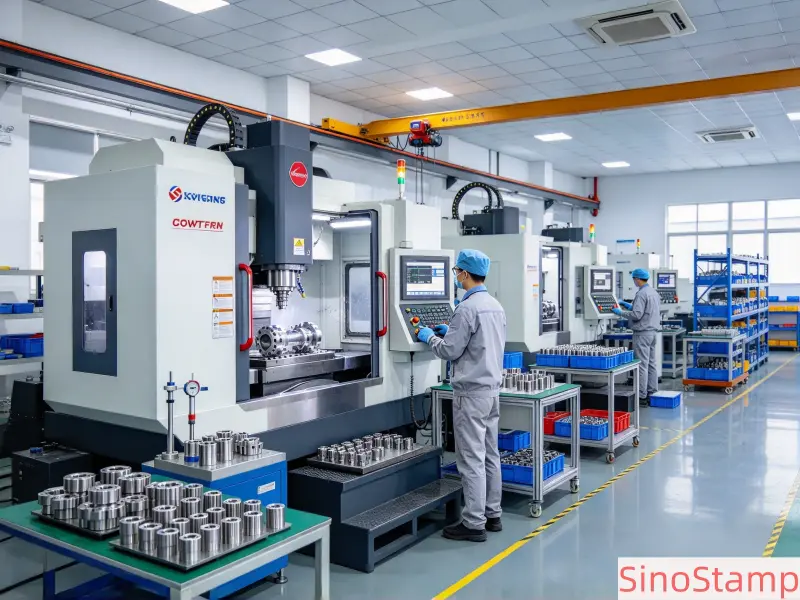
SinoStamp is a China-based manufacturer and supplier of custom electrical metal stamping parts for electrical equipment manufacturers, connector producers, switch manufacturers, industrial control companies, and OEM component buyers. We specialize in manufacturing precision stamped metal components according to customer engineering drawings, technical specifications, physical samples, and customized product requirements. Our main product range includes copper terminal stamping parts, electrical contact stamping components, connector terminals, and switch contacts. We support OEM and ODM manufacturing projects requiring customized metal components for electrical connections, switching systems, power distribution assemblies, and industrial equipment.
Electrical metal stamping plays an important role in the manufacturing of electrical and electronic products. Many electrical assemblies depend on accurately formed conductive metal components to establish stable connections, transfer electrical current, and maintain reliable contact between different parts. These components may be relatively small, but their material properties, contact geometry, surface condition, and dimensional accuracy can influence the performance of the complete electrical assembly. Precision stamping provides an efficient manufacturing method for producing these components in consistent shapes and repeatable quantities.
For international purchasing teams, finding a suitable electrical metal stamping parts manufacturer involves evaluating more than the initial component price. Material selection, conductivity, mechanical strength, tooling design, stamping accuracy, plating requirements, inspection procedures, and production consistency are all important considerations. SinoStamp focuses on custom B2B manufacturing and works with customers to understand their technical specifications and purchasing requirements before production. Whether you are sourcing copper terminals for electrical connectors, stamped contacts for switching devices, or custom conductive components for industrial equipment, we can evaluate your project and discuss a suitable manufacturing arrangement.
Custom Electrical Metal Stamping Solutions for OEM Manufacturers
Electrical metal stamping is a manufacturing process used to transform sheet metal or metal strip into functional electrical components through operations such as blanking, piercing, bending, forming, and other specialized stamping processes. It is widely used for producing conductive terminals, contact plates, connector components, switch elements, and custom metal parts used in electrical assemblies. Depending on the component design and production requirements, different tooling arrangements can be selected to achieve the required geometry and manufacturing efficiency.
Our custom manufacturing service focuses on non-standard electrical components developed according to customer drawings, samples, and technical documentation. These products are generally designed for specific connector housings, switch structures, electrical terminals, or equipment assemblies. Important manufacturing considerations include material grade, thickness, conductivity, hardness, contact geometry, dimensional tolerances, plating requirements, and the intended operating environment.
For new product development, early communication between the customer and manufacturer can help identify potential production challenges. For example, a copper terminal may require a specific contact area and forming angle to fit a connector housing. An electrical contact plate may require a defined material hardness and surface finish to achieve its intended function. A switch contact may require controlled geometry to match the movement and positioning of the switching mechanism. Reviewing these requirements before tooling development can help improve manufacturing feasibility and reduce unnecessary changes during production.
We support OEM customers with established component drawings as well as companies developing new electrical products. Depending on the project, manufacturing arrangements may include prototype samples, custom stamping dies, small-batch production, and repeat manufacturing. Our objective is to help customers source customized electrical metal components with clear technical specifications and consistent production requirements.
Our Electrical Metal Stamping Products
SinoStamp organizes its electrical metal stamping product range into four main categories: copper terminal stamping, electrical contact stamping, connector terminals, and switch contacts. Each category serves a different function within electrical systems and requires specific material and manufacturing considerations. By focusing on these applications, we aim to provide relevant custom manufacturing support for electrical equipment producers and component sourcing companies.
Copper Terminal Stamping
Copper terminal stamping is one of the most important applications in electrical metal component manufacturing. Copper terminals are used to establish conductive connections between wires, cables, electrical devices, circuit assemblies, and power distribution systems. They are widely used in electrical connectors, control panels, battery connections, industrial equipment, wiring assemblies, and various electronic products.
Custom copper terminals are available in many shapes and configurations depending on their electrical and mechanical functions. Common designs include flat terminals, blade terminals, tab terminals, connecting plates, mounting terminals, and specially formed conductive components. Some terminals incorporate mounting holes, slots, locking features, or bent sections that allow them to connect with other electrical components or fit into connector housings.
Copper and copper alloys are frequently selected because of their electrical conductivity and forming characteristics. However, different applications require different combinations of conductivity, hardness, strength, and spring properties. Pure copper may be considered where high conductivity is important, while brass and phosphor bronze may be suitable for applications requiring additional mechanical strength or elastic characteristics. The final material specification should be determined according to the electrical requirements and mechanical conditions of the finished product.
Material thickness and terminal geometry directly affect the mechanical and electrical characteristics of the finished component. The design should consider current-carrying requirements, contact area, connection method, installation space, and the expected mechanical load. For terminals used in repeated connection or disconnection applications, contact stability and wear characteristics may also need to be evaluated.
The manufacturing process for copper terminal stamping may include blanking, piercing, bending, forming, and secondary operations. Precision tooling is important for maintaining hole positions, contact dimensions, and terminal profiles. Burr control is also important because excessive burrs can interfere with connector assembly, damage insulation materials, or affect the contact interface.
Surface finishing may be required depending on the application. Common specifications include tin plating, nickel plating, silver plating, and other treatments selected according to conductivity, corrosion resistance, solderability, and contact requirements. Customers should define the required coating type, thickness, and coverage in their engineering drawings or technical specifications.
SinoStamp supports custom copper terminal stamping projects based on customer drawings, CAD files, and physical samples. We can review material grade, thickness, terminal geometry, hole positions, surface treatment, and expected production quantities. For new projects, sample evaluation can help confirm dimensional compatibility and assembly requirements before production tooling is finalized.
Electrical Contact Stamping
Electrical contact stamping involves manufacturing metal components that establish, maintain, or interrupt electrical connections within electrical and electronic systems. These parts are commonly used in relays, switches, control devices, electrical connectors, power equipment, and industrial automation products. Depending on the application, electrical contacts may be flat contact plates, formed contact elements, conductive strips, spring contacts, or customized metal components.
Electrical contacts are functional components rather than simple structural parts. Their performance can be influenced by material conductivity, contact area, contact pressure, surface condition, temperature, operating environment, and the electrical load applied to the system. Consequently, material selection and manufacturing accuracy should be evaluated according to the actual function of the contact within the finished product.
Copper alloys are commonly considered for electrical contact stamping because they provide useful combinations of conductivity and mechanical properties. Brass and phosphor bronze are frequently used in different contact applications. Other materials may be specified depending on the required electrical characteristics, operating temperature, contact force, and mechanical durability.
For certain applications, the contact surface may require additional plating or specialized contact materials. Tin, nickel, silver, and other specified finishes can provide different surface characteristics. The correct finishing method depends on the product's electrical requirements, environmental conditions, and expected service life. Surface treatment specifications should be confirmed before production to ensure that the manufacturing process matches the customer's requirements.
Manufacturing considerations include contact dimensions, material thickness, forming geometry, hole positions, flatness, and surface condition. Components with multiple bends or formed contact sections may require specialized tooling to maintain repeatable dimensions. Inspection should focus on the features that affect electrical connection and assembly compatibility.
For OEM customers, SinoStamp supports custom electrical contact stamping according to engineering drawings and samples. During project evaluation, we consider material specifications, contact configuration, forming requirements, surface finishing, and production quantity. Customers developing new electrical products can provide application details to help clarify the intended contact function and manufacturing requirements.
Connector Terminals
Connector terminals are essential conductive components used to establish electrical connections between cables, circuit boards, devices, and electrical systems. They are widely used in industrial connectors, automotive electrical systems, communication equipment, consumer electronics, power distribution products, and industrial control assemblies. Depending on the connector design, terminals may include male terminals, female terminals, pin contacts, blade terminals, receptacle contacts, and customized stamped conductive parts.
Custom connector terminals are designed to fit specific connector housings and mating components. Their dimensions and geometry must therefore be coordinated with the complete connector structure. Important features may include terminal width, thickness, contact area, insertion length, locking sections, retaining tabs, and crimping geometry. Dimensional consistency is important because variations can affect terminal insertion, retention, contact pressure, and assembly efficiency.
Copper alloys are commonly used for connector terminal manufacturing because of their conductivity and formability. Brass may be suitable for certain rigid terminal structures, while phosphor bronze can be considered for components requiring spring characteristics. Other materials may be specified according to the customer's mechanical and electrical requirements. Material selection should also consider the terminal's expected operating temperature, environmental exposure, and connection method.
Surface treatment is another important consideration for connector terminals. Tin plating is commonly specified for selected electrical connections, while nickel and silver plating may be required for particular applications. The appropriate coating depends on contact requirements, corrosion resistance, soldering conditions, and the intended operating environment. Plating specifications should identify coating type, thickness, and any required inspection or testing standards.
Connector terminals may be manufactured through blanking, piercing, bending, forming, and progressive die stamping. For products with high repeat demand and suitable geometry, progressive tooling can help achieve efficient production. The strip layout and forming sequence should be developed according to the terminal design and material properties.
OEM customers should provide connector drawings, terminal specifications, mating component information, and expected production quantities when requesting a quotation. These details help evaluate dimensional requirements, material selection, tooling feasibility, and inspection methods. SinoStamp supports custom connector terminal manufacturing according to customer engineering requirements and approved samples.
Switch Contacts
Switch contacts are metal components used to establish or interrupt electrical circuits during the operation of switching devices. They are commonly used in household electrical switches, industrial control switches, relays, power control systems, appliance control assemblies, and various electrical equipment. Depending on the switch structure, contact components may include fixed contacts, movable contacts, contact plates, spring contacts, and specially formed conductive elements.
The geometry and material of switch contacts are important because the components must operate within a specific switching mechanism. Contact position, contact area, alignment, material hardness, and surface condition can influence the electrical connection and mechanical operation. The manufacturing process should maintain consistent dimensions so that the contacts fit correctly within the switch assembly.
Copper alloys are frequently used for stamped switch contact components because of their conductivity and forming properties. However, different switching applications may require specialized contact materials or additional contact surfaces to meet electrical endurance and wear requirements. For applications involving repeated switching under electrical load, material selection and contact design should be based on the customer's product specifications and relevant validation requirements.
Manufacturing processes may include precision blanking, piercing, bending, forming, and additional surface finishing. Some switch contact structures incorporate spring sections that maintain pressure between mating surfaces. These components require attention to material thickness, forming angle, and mechanical characteristics. Tooling design should account for the functional geometry of the switching mechanism.
Surface finishing may include tin, nickel, silver, or other specified coatings depending on the application. The choice of coating should be evaluated according to electrical performance, environmental exposure, and product requirements. Customers should provide relevant technical documentation to ensure that the finished contact components match the intended design.
SinoStamp supports custom switch contact stamping for OEM and ODM customers. We can evaluate drawings and samples to understand the required material, geometry, contact configuration, forming process, and production quantity. For new switch products, sample development can help verify mechanical fit and dimensional compatibility before regular production.
Materials for Electrical Metal Stamping Parts
Material selection is a critical factor in electrical metal stamping because the finished components may need to provide both mechanical and electrical functions. Different applications require different levels of conductivity, strength, hardness, elasticity, corrosion resistance, and formability. The correct material should be selected according to the product design and technical requirements rather than using one material for every type of electrical component.
Copper
Copper is widely used in electrical components because of its high electrical conductivity and suitable forming characteristics. It can be considered for terminals, contact plates, connecting components, and other conductive stamped parts. The specific copper grade should be selected according to the required conductivity, mechanical properties, and manufacturing process. For certain applications, copper may also require surface finishing to improve its suitability for the operating environment.
Brass
Brass is a copper alloy commonly used in terminals, connector components, electrical contacts, and other stamped conductive parts. It provides a practical combination of conductivity, strength, machinability, and formability. Different brass grades have different properties, so the appropriate specification should be confirmed according to the required component function and manufacturing requirements.
Phosphor Bronze
Phosphor bronze is frequently considered for electrical components that require a combination of conductivity and spring characteristics. It is used in connector contacts, switch components, spring terminals, and other flexible conductive parts. Its suitability depends on the required hardness, elasticity, fatigue behavior, and electrical properties. Material temper and thickness should be considered during product design and tooling development.
Stainless Steel
Stainless steel may be used in selected electrical components where mechanical strength and corrosion resistance are important. It can be suitable for structural contact supports, retaining components, clips, and other parts with specific mechanical requirements. Its electrical conductivity is generally lower than that of copper alloys, so it should not automatically be selected for applications requiring high conductivity.
Material Thickness and Mechanical Properties
Material thickness influences the dimensions, stiffness, forming behavior, and mechanical performance of electrical stamped components. For spring contacts and flexible terminals, thickness can have a significant effect on spring behavior and contact force. For rigid terminals, it can influence structural strength and connection stability. OEM customers should specify material grade and thickness clearly in engineering documentation whenever possible.
Precision Electrical Metal Stamping Processes
The appropriate stamping process depends on the component structure, material properties, dimensional tolerances, and production quantity. Electrical terminals and contacts often contain small features that require careful tooling design and process control. The manufacturing sequence should be selected to achieve the required geometry while maintaining consistent quality throughout production.
Blanking and Piercing
Blanking creates the external shape of a component, while piercing produces holes, slots, and other internal openings. These operations are widely used in copper terminals, connector contacts, switch components, and electrical contact plates. Tooling clearance, material thickness, and cutting conditions influence edge quality and burr formation. For precision electrical components, critical dimensions and edge conditions should be defined before production.
Bending and Forming
Bending and forming operations are used to create three-dimensional terminal shapes, spring sections, mounting features, and connection structures. The material's hardness, thickness, grain direction, and springback characteristics can influence the final geometry. For components with multiple bends, the forming sequence should be evaluated to reduce deformation and maintain dimensional accuracy.
Progressive Die Stamping
Progressive die stamping is a suitable manufacturing method for many electrical terminals and contacts with repeat production demand. Metal strip moves through a sequence of stations, with each station performing a specific operation such as piercing, blanking, bending, or forming. The finished component is produced after the material passes through the required operations.
This method can improve production efficiency for suitable terminal and contact designs. However, the feasibility of progressive tooling depends on component geometry, material properties, strip layout, required accuracy, production quantity, and tooling investment. For projects with small initial quantities or frequent design changes, alternative tooling arrangements may be more practical. The process should be selected according to the customer's production plan and product requirements.
Custom Tooling and Die Development
Custom stamping dies are essential for producing electrical metal components with repeatable geometry and consistent dimensions. The tooling structure depends on the part design, material thickness, forming operations, and expected production quantity. Different projects may require blanking dies, piercing dies, bending dies, compound dies, or progressive dies.
For new projects, customers can provide 2D drawings, 3D CAD models, or physical samples for manufacturing evaluation. The technical review should identify material grade, thickness, critical dimensions, tolerance requirements, contact features, and any special forming characteristics. This information helps determine the appropriate tooling approach and production sequence.
Before tooling development begins, it is important to confirm the latest approved drawing revision and material specifications. Changes to component dimensions, material, or functional requirements after tooling completion may affect the tooling structure, production schedule, and project cost. Clear communication during the development stage can help reduce unnecessary modifications and support a smoother transition to production.
Surface Finishing and Plating for Electrical Components
Surface finishing is particularly important for electrical stamped components because the surface may form part of the conductive contact interface. Different coatings provide different characteristics in terms of corrosion protection, electrical contact behavior, solderability, and wear resistance. The finishing process should be selected according to the component's function and the customer's technical specifications.
Tin Plating
Tin plating is commonly specified for electrical terminals and selected connector components. It can provide useful solderability and surface protection characteristics in suitable applications. The required coating thickness and coverage should be defined according to the customer's product requirements. The base material and surface condition should also be considered during finishing process selection.
Nickel Plating
Nickel plating may be used as a protective or functional surface treatment for selected electrical components. It can provide corrosion resistance and a durable metal surface in appropriate applications. The suitability of nickel plating depends on the electrical contact requirements, coating thickness, base material, and operating conditions.
Silver Plating
Silver plating may be specified for certain electrical contact applications requiring particular conductivity and contact characteristics. Its use depends on the electrical load, operating environment, cost considerations, and customer specifications. For specialized contact components, the final surface treatment should be confirmed through the relevant engineering and validation requirements.
Deburring and Cleaning
Deburring is used to remove or reduce unwanted sharp edges and burrs produced during stamping. This is important for terminals and contact components that must fit precisely into connector housings or electrical assemblies. Cleaning may also be required to remove residues before plating, assembly, or packaging. The acceptable surface condition should be defined according to the component's application and inspection standards.
Quality Control for Electrical Metal Stamping Parts
Quality control is essential for electrical metal stamping because variations in dimensions, material properties, and surface condition can affect component performance. A practical quality control process should consider incoming material, production stability, dimensional accuracy, surface finishing, and final product inspection. The inspection plan should be based on the customer's approved drawings and the functional importance of each component feature.
Incoming Material Inspection
Incoming material verification may include checking material grade, thickness, surface condition, and supporting documentation where required. For copper and copper alloy components, material specifications are especially important because conductivity and mechanical properties influence the finished product. Material information should be confirmed before production begins.
Dimensional Inspection
Dimensional inspection may cover overall length, width, thickness, hole positions, terminal profiles, bend angles, contact dimensions, and other drawing-specific characteristics. Suitable measurement equipment and inspection methods should be selected according to the geometry and tolerance requirements of each part. Critical dimensions that affect connector fit or electrical contact should receive particular attention.
Surface and Burr Inspection
Surface inspection helps identify scratches, dents, deformation, contamination, plating defects, and other visible issues. Burr inspection is also important for components with close-fitting assembly requirements. For electrical contacts, the contact surface should be checked according to the specified finish and functional requirements.
Production Process Monitoring
Repeat manufacturing requires monitoring of tooling condition, material feeding, forming stability, and production settings. These factors can influence component dimensions and consistency between batches. For ongoing OEM projects, customers and suppliers can establish inspection requirements and agreed specifications to support repeat order quality.
OEM and ODM Electrical Component Manufacturing
SinoStamp focuses on B2B manufacturing cooperation with electrical equipment producers, connector manufacturers, switch manufacturers, and component sourcing companies. Our OEM manufacturing service supports customers who already have engineering drawings, material specifications, and approved product designs. Components are manufactured according to agreed technical requirements and production arrangements.
For ODM-related projects, customers may require support reviewing component geometry, material options, forming feasibility, and tooling requirements during product development. The scope of development support depends on project complexity and the available technical information. Our objective is to help customers evaluate practical manufacturing considerations before committing to regular production.
Custom Manufacturing Based on Engineering Drawings
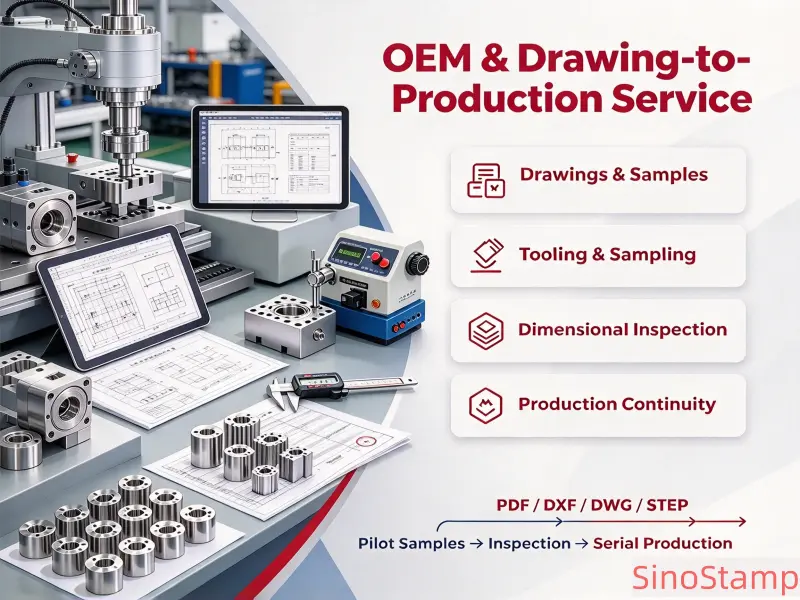
Engineering drawings provide the technical foundation for custom electrical metal stamping. They should identify material grade, thickness, dimensions, tolerances, surface finishing, and important contact features. Customers can provide PDF drawings, 2D CAD files, 3D models, and relevant product documentation for quotation and manufacturing evaluation.
Prototype Samples and Functional Evaluation
Prototype samples help customers evaluate component dimensions, physical fit, assembly compatibility, and selected functional characteristics before production tooling is finalized. Depending on the product, additional validation may be required to evaluate electrical contact behavior, mechanical retention, spring characteristics, or other application-specific performance requirements. Customers should define relevant testing criteria and acceptance requirements during project development.
Small-Batch and Repeat Production
New electrical products may require smaller quantities during the initial development and validation stages. We welcome inquiries for suitable small-batch and medium-volume manufacturing projects, with production arrangements evaluated according to part complexity, tooling requirements, material availability, and order quantity. For customers with recurring demand, repeat orders can be coordinated according to approved drawings, established specifications, and agreed quality requirements.
Applications of Electrical Metal Stamping Parts
Electrical metal stamping components are used in many industries where reliable conductive connections and mechanical contact structures are required. The component design and material specification depend on the electrical system, current requirements, mechanical environment, assembly method, and operating conditions.
Electrical Connectors and Wiring Systems
Electrical connectors and wiring systems use terminals and contact components to establish connections between cables, equipment, and electronic assemblies. Stamped connector terminals may include male and female contacts, crimp terminals, blade terminals, and customized conductive components. Dimensional consistency and suitable surface treatment are important for connector assembly and electrical connection requirements.
Industrial Control Equipment
Industrial control products may incorporate copper terminals, electrical contacts, switch contacts, and other stamped metal components. These parts are used in control panels, relays, switching assemblies, and electrical distribution structures. Depending on the application, material strength, conductivity, corrosion resistance, and dimensional stability may be important selection criteria.
Power Distribution Equipment
Power distribution products use conductive metal components to establish electrical connections between different sections of an electrical system. Custom stamped terminals and contact plates may be designed for specific mounting and connection structures. Their material specifications and dimensions should be determined according to the electrical and mechanical requirements of the complete assembly.
Household Electrical Appliances
Electrical components are widely used in household appliances, including switches, control systems, wiring assemblies, and internal electrical connections. Stamped terminals and contact components help establish electrical paths between different assemblies. The manufacturing requirements depend on product structure, operating conditions, and the customer's technical specifications.
Automotive and Electronic Assemblies
Electrical terminals and contact components may also be used in automotive electrical systems and electronic assemblies. These applications can involve specific requirements for vibration resistance, temperature conditions, corrosion resistance, and electrical performance. Material selection and manufacturing validation should be based on the relevant customer specifications and applicable industry requirements.
Why Choose SinoStamp for Electrical Metal Stamping Parts
Choosing an electrical metal stamping supplier requires a balance between manufacturing capability, technical understanding, quality requirements, and commercial considerations. OEM customers need a supplier that can understand their drawings, evaluate material and tooling requirements, and support consistent production according to approved specifications. SinoStamp focuses on custom B2B metal component manufacturing and welcomes inquiries from electrical equipment manufacturers and international sourcing teams.
Focused Electrical Component Product Range
Our product range focuses on copper terminal stamping, electrical contact stamping, connector terminals, and switch contacts. These components serve important functions in electrical connections, switching systems, and industrial assemblies. This product focus helps customers identify suitable manufacturing categories and communicate their project requirements more clearly.
Custom OEM Manufacturing
We support non-standard electrical metal components manufactured according to customer drawings, specifications, and approved samples. This approach is suitable for companies developing proprietary connector designs, electrical devices, switching systems, and customized equipment. Material grades, dimensions, tolerances, and finishing requirements can be evaluated according to each project's technical documentation.
Tooling and Production Coordination
Tooling arrangements should be selected according to component geometry, production volume, material characteristics, and expected product life cycle. We encourage customers to provide technical drawings and estimated order quantities so that the manufacturing approach can be reviewed more effectively. A suitable tooling strategy can help balance initial investment and repeat production efficiency.
Support for International B2B Buyers
International sourcing projects require clear communication regarding drawings, samples, material specifications, quotations, tooling, inspection requirements, production schedules, packaging, and shipping arrangements. We aim to provide practical project coordination so that customers can understand manufacturing requirements and make informed purchasing decisions.
How to Start Your Custom Electrical Metal Stamping Project
Starting a custom electrical metal stamping project is easier when the customer provides complete technical and purchasing information. The most useful documents include 2D engineering drawings, 3D CAD models, material specifications, product samples, and assembly information. For conductive components, customers should also identify relevant electrical requirements and surface finishing specifications.
During initial project evaluation, important details include material grade, thickness, component geometry, critical dimensions, tolerance requirements, contact structure, plating specifications, and estimated production quantity. If the component is part of a connector or switching assembly, information about mating parts and installation conditions can also help clarify manufacturing requirements.
For new designs, prototype samples can be used to verify dimensions, assembly fit, and selected mechanical characteristics. Once the sample and technical requirements are approved, tooling and production arrangements can be finalized according to the agreed project scope. For ongoing orders, approved specifications and inspection requirements provide a foundation for consistent repeat manufacturing.
Information Required for an Accurate Quotation
To evaluate your electrical metal stamping project and prepare a practical quotation, we recommend providing as much of the following information as possible:
- Product name and intended electrical application.
- 2D engineering drawings or 3D CAD files.
- Material grade, temper, and required thickness.
- Overall dimensions and critical dimensional tolerances.
- Electrical conductivity or other relevant material requirements.
- Contact geometry, connection method, and assembly details.
- Surface treatment, plating type, coating thickness, and coverage.
- Prototype quantity and initial production quantity.
- Estimated monthly or annual demand for repeat orders.
- Inspection, functional testing, or documentation requirements.
- Packaging specifications and delivery destination.
Complete project information helps reduce assumptions during quotation and makes it easier to evaluate tooling, material, and production requirements. If some specifications are still under development, customers can provide the confirmed information and identify the items that require further discussion. This is especially useful for new connector, switch, and electrical component projects.
Long-Term Electrical Metal Stamping Supply for OEM Manufacturers
Electrical equipment manufacturers often require metal terminals and contact components throughout the life cycle of their products. Once a component has been approved and integrated into an assembly, consistent dimensions, material specifications, and production quality become important for ongoing manufacturing. A reliable supply arrangement should therefore consider both initial sample development and future repeat orders.
SinoStamp aims to establish long-term B2B cooperation with electrical equipment producers, connector manufacturers, switch manufacturers, and sourcing companies. Whether your project involves copper terminals, electrical contact plates, connector terminals, or custom switch contacts, we welcome opportunities to review your technical requirements and discuss suitable manufacturing solutions.
If your company is looking for a China-based electrical metal stamping parts manufacturer, you can send us your drawings, samples, or technical specifications for evaluation. Our team can review the material requirements, component geometry, tooling approach, production quantity, and inspection criteria to help determine the next steps for sampling and production.
Contact SinoStamp to discuss your custom electrical metal stamping requirements and explore an OEM or ODM manufacturing solution for your electrical components.
```