How to Choose a Reliable Metal Stamping Manufacturer in China: 10 Key Factors for OEM Buyers
Finding a reliable metal stamping manufacturer in China is an important decision for OEM companies, product developers, and industrial procurement teams. Whether you need electronic metal components, electrical terminals, appliance brackets, or other custom stamped parts, the right manufacturing partner can directly influence product quality, production costs, delivery schedules, and long-term supply stability.
China has a well-developed metal manufacturing industry, offering a wide range of production capabilities, material options, tooling resources, and surface finishing services. For international buyers, working with a Chinese metal stamping supplier can provide access to competitive manufacturing costs and flexible production arrangements. However, not every supplier has the same technical experience, quality management capabilities, or ability to support customized OEM projects.
Choosing a supplier based only on the lowest quotation can create problems later. Inconsistent dimensions, unsuitable materials, poorly designed stamping dies, unstable production quality, and unexpected tooling expenses may increase the total cost of a project. A supplier that appears inexpensive at the beginning may become more expensive if it cannot maintain consistent quality or meet delivery requirements.
For OEM buyers, the goal should be to identify a manufacturing partner that understands engineering requirements, can produce parts according to approved drawings and specifications, and has the production capacity to support both initial orders and repeat business.
This guide explains ten important factors to consider when evaluating a metal stamping manufacturer in China. It is designed to help procurement managers, mechanical engineers, product developers, and sourcing professionals make more informed supplier decisions.
1. Understand the Manufacturer's Actual Production Capabilities
The first step is to determine whether a supplier has the manufacturing capabilities required for your specific metal stamping project. A company may describe itself as a precision metal stamping manufacturer, but its actual equipment, production processes, and engineering experience need to be evaluated.
Metal stamping covers several different manufacturing operations. Depending on the component design, material, thickness, production volume, and dimensional requirements, a supplier may need to use one or more of the following processes:
- Blanking: Cutting flat metal sheets into specific shapes or profiles.
- Punching: Producing holes, slots, openings, and other features in metal components.
- Bending: Forming sheet metal into angles, flanges, and three-dimensional structures.
- Progressive Die Stamping: Performing multiple stamping operations through a series of stations within one production die.
- Deep Drawing: Forming flat metal blanks into deeper or more complex shapes.
- Forming: Creating specific geometries through controlled deformation of metal materials.
- Coining: Applying controlled pressure to produce detailed features or improve dimensional definition.
Not every project requires all these processes. A simple flat metal bracket may only require blanking and punching, while a more complicated electrical contact or electronic shielding component may require multiple forming operations and tighter dimensional control.
When evaluating a potential supplier, ask which stamping processes are available and whether the manufacturer has produced similar components before. Relevant production experience is often more valuable than a general claim of having advanced equipment.
You should also ask about the manufacturer's production equipment, including press capacity, available machine types, automation level, and the range of material thicknesses it can process. These details help determine whether the supplier can handle your part design and expected production volume.
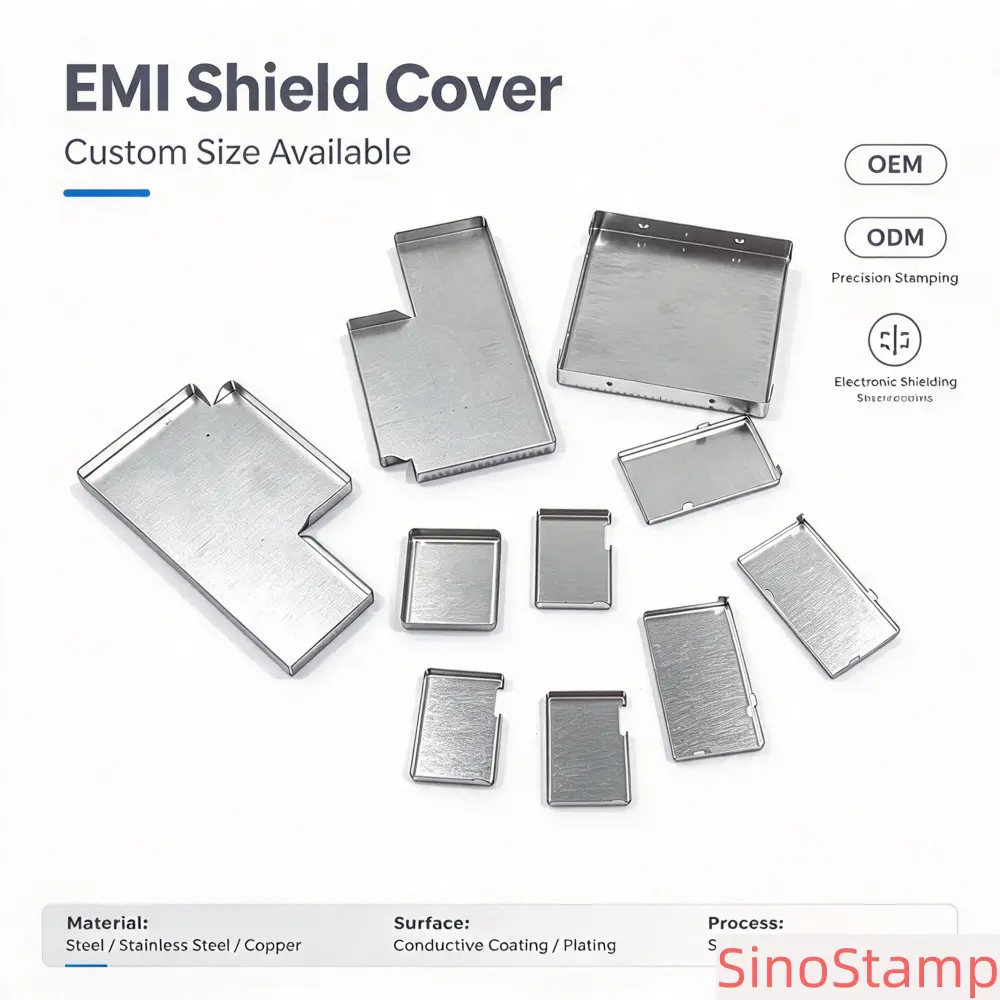
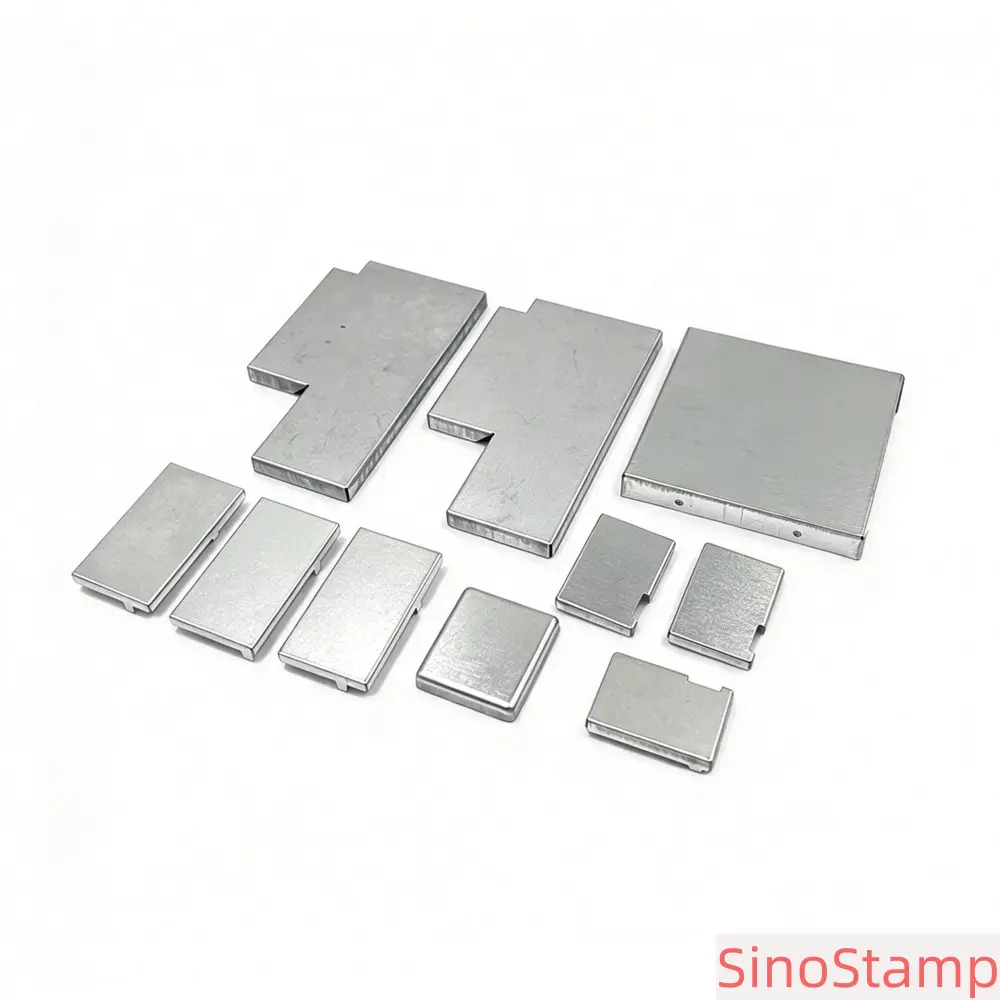
For example, a manufacturer producing electronic shielding covers may need experience with thin metal sheets, small dimensions, precise forming, and consistent contact structures. A supplier producing electrical terminals may need different tooling, material handling, and inspection capabilities.
A capable metal stamping manufacturer should be able to explain how its production processes relate to your product requirements rather than simply offering a general statement about factory capabilities.
2. Evaluate Tooling and Die Development Experience
Tooling is one of the most important factors in custom metal stamping. The quality of the stamping die affects production consistency, dimensional accuracy, manufacturing efficiency, and the long-term cost of a project.
For customized OEM components, the manufacturer may need to develop dedicated tooling based on your engineering drawings, 3D models, samples, or technical specifications. The complexity of the tooling depends on the part geometry, material properties, required tolerances, production volume, and selected stamping process.
There are several common types of stamping dies:
- Single-operation dies: Designed to perform one main stamping operation at a time.
- Compound dies: Perform multiple cutting operations in one press stroke.
- Progressive dies: Move material through multiple stations to complete several operations during continuous production.
- Forming dies: Designed to create bends, curves, shapes, or other formed features.
Before placing a tooling order, OEM buyers should understand the supplier's die development process. Important questions include:
- Can the manufacturer review engineering drawings before tooling development?
- Can its engineers identify potential manufacturing difficulties?
- Will the supplier recommend design changes when necessary?
- Does the tooling quotation clearly describe the included work?
- Will the supplier conduct trial production before sample approval?
- How are tooling maintenance and future modifications handled?
- Who owns the tooling after the project is completed?
Tooling ownership is particularly important for overseas OEM customers. The agreement should clearly state whether the tooling is owned by the buyer or manufacturer, where it will be stored, and under what conditions it can be transferred or used for future production.
Buyers should also ask whether tooling maintenance is included in the production price or charged separately. Stamping dies are subject to wear during repeated production. Regular inspection and maintenance help reduce the risk of dimensional changes, burr problems, and unexpected production interruptions.
A reliable supplier should be willing to discuss tooling design, development schedules, trial results, maintenance arrangements, and ownership terms before the project begins.
3. Check Material Selection and Material Traceability
Material selection directly affects the strength, conductivity, formability, corrosion resistance, appearance, and overall performance of stamped metal components. Choosing the wrong material can result in forming cracks, deformation, poor electrical contact, premature corrosion, or failure during product assembly.
A professional metal stamping manufacturer should understand the relationship between material properties and component design. The supplier should be able to review your specified material grade and suggest alternatives when appropriate, while respecting your engineering and regulatory requirements.
Common materials used in precision metal stamping include:
Carbon Steel
Carbon steel is widely used for brackets, mounting plates, structural supports, fastening components, and other industrial metal parts. Different grades offer different strength, hardness, and formability characteristics. Surface treatments may be required to improve corrosion resistance.
Stainless Steel
Stainless steel is commonly selected when corrosion resistance, mechanical strength, and durability are important. It is used in appliance components, electronic housings, mounting parts, and industrial assemblies. Different stainless steel grades have different forming characteristics, so material selection should consider the required geometry and processing conditions.
Copper
Copper offers excellent electrical conductivity and is commonly used for electrical terminals, conductive contacts, connector components, and other electrical applications. Its softness and forming behavior need to be considered during die design and production.
Brass
Brass is used for electrical contacts, connector terminals, precision components, and decorative or functional metal parts. It offers a useful combination of conductivity, machinability, and formability, depending on the selected alloy.
Aluminum
Aluminum is valued for its low weight, corrosion resistance, and formability. It is used in electronic components, appliance structures, enclosures, and lightweight industrial assemblies. The selected alloy and temper influence its stamping behavior.
Tinplate and Nickel Silver
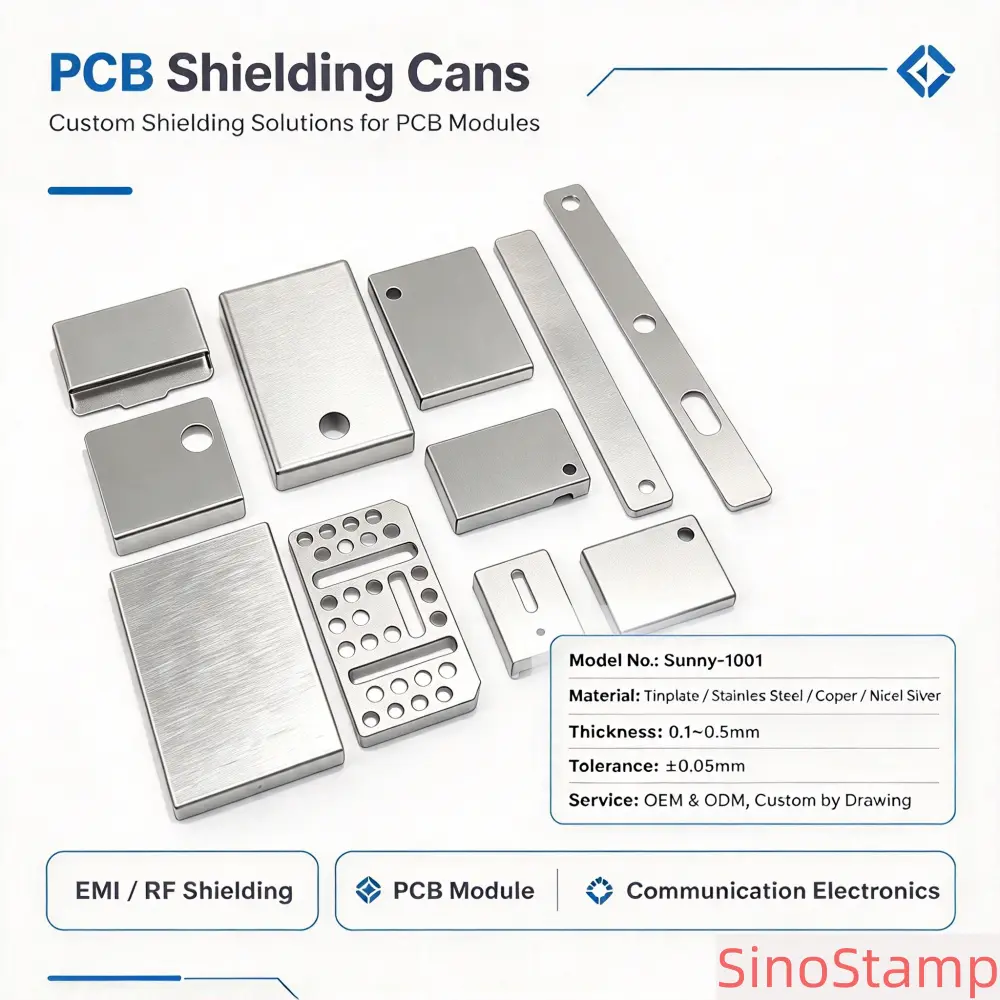
Tinplate is commonly used for certain electronic shielding components and other applications requiring suitable conductivity and surface characteristics. Nickel silver, which is a copper-based alloy containing nickel and zinc, may be selected for specific shielding, contact, and precision component applications.
When requesting a quotation, provide the material grade, thickness, temper or condition where applicable, and any relevant material standards. If your engineering specification requires a particular grade, the supplier should not substitute another material without written approval.
Material traceability is also worth discussing. Depending on the project requirements, buyers may request material certificates, batch identification, supplier documentation, or inspection records. These documents help establish that the supplied material meets the agreed specifications.
4. Confirm Dimensional Tolerances and Precision Capabilities
Dimensional accuracy is a major consideration when selecting a precision metal stamping supplier. A stamped component may appear simple, but even small dimensional variations can affect assembly, electrical contact, mechanical fit, or the performance of the final product.
For OEM projects, the manufacturer's ability to maintain critical dimensions consistently is often more important than achieving an extremely tight tolerance on every feature.
Before production, buyers should identify the dimensions that have the greatest functional importance. These may include:
- Hole diameters and hole positions.
- Part length, width, and overall profile dimensions.
- Bend angles and formed heights.
- Flatness and parallelism requirements.
- Mounting positions and alignment features.
- Contact areas and connection dimensions.
- Critical distances between functional features.
It is important to understand that achievable tolerances depend on several factors, including material thickness, material properties, part geometry, tooling design, stamping process, and inspection method.
A supplier should not promise the same tolerance for every component without reviewing the actual drawing. A tolerance that is practical for a simple punched feature may be difficult or unnecessarily expensive for a complex formed part.
OEM buyers should provide complete engineering drawings with clearly defined dimensions and tolerances. Where possible, identify critical-to-quality dimensions and indicate which features affect final assembly or product performance.
During supplier evaluation, ask how dimensional inspection is performed. Common inspection equipment may include:
- Digital calipers and micrometers for basic dimensional measurements.
- Height gauges for measuring vertical dimensions.
- Pin gauges for checking hole sizes.
- Optical measuring systems for small or complex profiles.
- Coordinate Measuring Machines (CMM) for selected complex dimensional checks.
- Custom inspection fixtures for repeatable measurement of functional features.
The inspection method should match the component's geometry and tolerance requirements. For example, an optical measurement system may be useful for small electronic stamped parts with multiple holes and narrow profiles, while a dedicated fixture may be more efficient for checking a high-volume component.
Before mass production, agree on the inspection criteria, measurement method, sampling frequency, and acceptance requirements. This helps avoid disagreements when samples and production parts are evaluated by different teams.
5. Review the Manufacturer's Quality Control System
Quality control should be part of the entire manufacturing process, not just a final inspection activity. A reliable metal stamping manufacturer should have procedures for checking incoming materials, monitoring production, inspecting finished components, and handling nonconforming products.
For OEM customers, inconsistent quality can lead to assembly delays, customer complaints, production interruptions, and additional inspection expenses. A structured quality management process helps reduce these risks.
When evaluating a supplier, ask how quality is controlled at each production stage.
Incoming Material Inspection
Incoming inspection helps verify that raw materials match the agreed specifications. Depending on the project, checks may include material thickness, width, surface condition, grade documentation, and batch identification.
First Article Inspection
First article inspection is used to verify that the initial production parts meet the approved drawings and specifications. This is particularly important after new tooling has been developed or when major production conditions have changed.
OEM buyers may request a first article inspection report containing actual measured values, drawing references, and inspection results for important dimensions.
In-Process Inspection
Production inspection helps identify problems while the stamping process is running. Depending on the component and production volume, the manufacturer may conduct periodic dimensional checks, visual inspections, and process monitoring.
Final Inspection
Final inspection checks whether finished components meet the agreed acceptance requirements before shipment. Common inspection items include dimensions, burrs, cracks, deformation, surface defects, plating appearance, and packaging condition.
Nonconforming Product Management
Ask how the supplier handles defective products. A professional manufacturer should have a process for identifying, isolating, recording, investigating, and resolving nonconforming products.
For projects with more demanding quality requirements, OEM buyers may also discuss statistical process control (SPC), process capability studies, control plans, and corrective action reports. These tools should be applied where they are relevant to the component and the customer's quality agreement.
Certifications can provide additional information about a supplier's management system, but buyers should verify the actual certificate holder, issuing organization, validity period, and scope. For example, an ISO 9001 certificate relates to a quality management system. It does not automatically prove that every product manufactured by the company meets a particular technical specification.
6. Evaluate Surface Finishing and Plating Options
Surface finishing is an important part of metal stamping because it can influence corrosion resistance, electrical conductivity, solderability, appearance, wear resistance, and compatibility with the final assembly.
The most suitable finishing method depends on the base material, component function, operating environment, and customer specification. Not every stamped part requires plating or additional surface treatment.
Common surface finishing options include:
- Tin Plating: Often used for electrical and electronic components where suitable solderability and surface characteristics are required.
- Nickel Plating: Used in applications requiring a suitable protective or functional surface layer.
- Silver Plating: Selected for certain electrical contact applications where conductivity is important.
- Gold Plating: Used for specific electronic contact applications requiring particular contact and corrosion characteristics.
- Zinc Plating: Commonly applied to steel components to improve corrosion protection.
- Passivation: Used for certain stainless steel applications to support corrosion resistance.
- Anti-Tarnish Treatment: Applied to selected materials and finishes to reduce surface discoloration during storage or use.
- Deburring: Removes or reduces unwanted sharp edges and burrs created during stamping.
When discussing finishing requirements, buyers should specify the coating type, thickness where applicable, appearance, performance requirements, and any relevant testing standards.
For electrical components, surface treatment may affect contact resistance, solderability, and long-term connection performance. The coating specification should therefore be selected according to the component's actual electrical function.
For electronic shielding covers, surface treatment may influence soldering behavior, grounding contact, and corrosion resistance. The finished part should be evaluated as part of the actual assembly when performance depends on contact geometry or installation conditions.
It is also important to clarify whether finishing is performed internally or through an approved external processing partner. If outsourced, ask how the supplier controls coating specifications, inspection records, delivery schedules, and batch consistency.
7. Ask About MOQ and Production Flexibility
Minimum order quantity (MOQ) is an important consideration for small and medium-sized OEM companies. Some manufacturers mainly focus on high-volume production and may not be suitable for buyers who need engineering samples, pilot runs, or medium-volume repeat orders.
When evaluating a metal stamping manufacturer in China, discuss your expected production quantities at different stages of the project.
For example, an OEM project may involve:
- Prototype samples for design verification.
- Initial production samples for dimensional and assembly evaluation.
- Pilot production before full-scale manufacturing.
- Small or medium-volume commercial orders.
- Regular repeat orders based on customer demand.
The supplier should explain how its production process and pricing change between these stages. A manufacturer may be able to support low-volume sample production but require a larger quantity for economical mass production. This is normal for many custom stamping projects because dedicated tooling and setup costs need to be considered.
Buyers should also distinguish between the MOQ for stock materials, the MOQ for custom stamping production, and the minimum quantity required by external finishing suppliers. These may be different.
For small and medium-sized OEM buyers, production flexibility can be a competitive advantage. A supplier that understands changing demand, scheduled repeat orders, and phased production can help reduce inventory pressure while maintaining supply continuity.
Before confirming an order, ask whether the supplier can support forecast-based production, scheduled deliveries, or agreed safety stock arrangements. Any such arrangement should be clearly documented, including inventory ownership and storage responsibilities.
8. Compare Total Project Cost Instead of Only Unit Price
Price is naturally an important factor when sourcing custom metal stamping parts. However, comparing suppliers only by their quoted unit price can lead to an incomplete purchasing decision.
The total cost of a metal stamping project may include several components:
- Raw material cost.
- Stamping and processing cost.
- Tooling and die development cost.
- Surface finishing and plating cost.
- Secondary operations such as tapping, welding, or assembly.
- Inspection and testing cost.
- Packaging and labeling cost.
- Transportation and export-related expenses.
For custom parts, tooling cost may represent a significant initial investment. However, the tooling expense may be distributed across a larger production quantity over time. This means the most economical supplier for a long-term project may not necessarily be the supplier offering the lowest initial tooling quotation.
Buyers should also consider material utilization. Different strip layouts and die designs can affect material waste. For high-volume production, improving material utilization may help reduce the overall manufacturing cost.
Another important factor is production stability. A slightly higher unit price may be justified if the supplier offers more consistent quality, reliable delivery, better process control, and fewer rejected parts.
When requesting quotations, ask suppliers to separate tooling charges, sample costs, unit prices, finishing charges, and other relevant expenses. This makes it easier to compare offers on an equivalent basis.
Make sure each supplier is quoting against the same drawing revision, material specification, finish, tolerance requirements, order quantity, and packaging conditions. Otherwise, the quotations may not be directly comparable.
9. Check Sample Development and Production Lead Times
Sample development is a critical stage in custom metal stamping. It allows OEM buyers to evaluate whether the supplier can manufacture the component according to the approved design before committing to regular production.
A reliable manufacturer should have a clear process for reviewing drawings, confirming specifications, developing tooling, conducting trial production, and submitting samples for customer approval.
Depending on the complexity of the part, sample development may involve several steps:
- Reviewing technical drawings and 3D models.
- Confirming material grades and thickness.
- Evaluating manufacturability and identifying design risks.
- Developing stamping dies and production fixtures.
- Conducting initial die trials.
- Adjusting tooling and process parameters when necessary.
- Producing samples for dimensional and visual inspection.
- Submitting samples and inspection documentation for approval.
OEM buyers should ask the supplier to provide an estimated schedule for each stage. The actual lead time depends on tooling complexity, material availability, finishing requirements, and the number of sample revisions required.
It is important to distinguish sample lead time from mass production lead time. A supplier may be able to produce samples quickly but require additional time to prepare production capacity, arrange finishing, and complete final quality checks for larger orders.
Buyers should also clarify what happens if the first samples do not meet the requirements. The agreement should explain how sample revisions, tooling adjustments, and additional sample charges are handled.
Before approving mass production, make sure the final sample, approved drawing revision, material specification, surface finish, and inspection requirements are properly documented.
10. Evaluate Communication and Long-Term Supply Capability
Technical capability and competitive pricing are important, but communication is equally essential when working with an overseas metal stamping supplier.
International OEM projects often involve engineering discussions, drawing revisions, material approvals, sample feedback, production schedules, quality issues, and shipment coordination. If communication is slow or unclear, even a technically capable manufacturer may become difficult to work with.
During the supplier evaluation process, pay attention to how the company responds to technical questions. A reliable supplier should be able to explain manufacturing limitations, identify unclear specifications, and ask relevant questions before providing a final quotation.
Consider the following communication factors:
- Does the supplier respond to technical inquiries clearly and consistently?
- Can it understand engineering drawings and manufacturing specifications?
- Does it communicate potential production risks before they become problems?
- Can it provide realistic sample and production schedules?
- Does it provide timely updates during tooling development and production?
- Can it handle corrective actions and customer feedback professionally?
Long-term supply capability should also be evaluated. OEM buyers generally need more than one successful sample order. They need a supplier that can maintain consistent production quality and support repeat orders over an extended period.
Ask about production capacity, equipment availability, raw material sourcing, tooling maintenance, backup arrangements, and the manufacturer's ability to manage changes in order quantities.
For companies planning to develop a long-term relationship, it is also useful to establish clear procedures for engineering changes, drawing revisions, material substitutions, inspection approvals, and product traceability.
A dependable metal stamping partner should focus not only on winning the first order but also on supporting the customer's ongoing production requirements.
Common Mistakes OEM Buyers Should Avoid When Selecting a Metal Stamping Supplier
Even experienced procurement teams can overlook important details when sourcing custom metal stamped components. The following mistakes can create unnecessary costs and delays.
Choosing a Supplier Based Only on the Lowest Price
A low quotation does not necessarily represent the best overall value. If the supplier uses unsuitable materials, lacks adequate process control, or has limited tooling experience, the project may experience higher costs later.
Compare quotations based on identical technical specifications and evaluate quality, delivery reliability, tooling ownership, and long-term production capability.
Providing Incomplete Drawings
Missing dimensions, unclear tolerances, unspecified materials, and incomplete finishing requirements can lead to different interpretations by different suppliers.
Provide clear engineering drawings and identify critical features before requesting quotations. If the design is still under development, explain which specifications are confirmed and which may change.
Ignoring Tooling Ownership
Tooling is a valuable asset in custom metal stamping. If ownership and storage arrangements are not agreed upon, transferring production to another supplier may become difficult.
Clarify tooling ownership, maintenance responsibilities, storage conditions, and transfer procedures in the purchasing agreement.
Skipping Sample Approval
Moving directly from tooling development to mass production without proper sample evaluation can increase the risk of quality problems.
Review samples against approved drawings and specifications. Where required, request dimensional reports and assembly verification before approving regular production.
Failing to Define Quality Requirements
General instructions such as "good quality" or "high precision" are not sufficient for controlling a custom metal stamping project.
Define measurable acceptance criteria, including critical dimensions, material requirements, surface finish, burr limits where applicable, and inspection methods.
Not Considering Long-Term Supply Requirements
A supplier may be suitable for a one-time sample order but may not have the resources or systems to support regular production.
Evaluate whether the manufacturer can maintain tooling, manage repeat orders, and control product consistency over time.
What Information Should You Prepare Before Requesting a Metal Stamping Quotation?
Providing complete technical information helps manufacturers evaluate your project more accurately and prepare more realistic quotations. The more clearly you define your requirements, the easier it is for suppliers to identify suitable materials, processes, tooling arrangements, and production costs.
Before contacting a metal stamping manufacturer, prepare the following information whenever possible:
1. Engineering Drawings
Provide 2D technical drawings, preferably with complete dimensions, tolerances, material specifications, and surface finishing requirements. If available, include 3D CAD files to help the supplier understand the component geometry.
2. Material Requirements
Specify the material type, grade, thickness, and temper or condition where applicable. If alternative materials are acceptable, explain the required mechanical, electrical, and corrosion-resistance properties.
3. Surface Finishing Requirements
Identify whether the part requires tin plating, nickel plating, zinc plating, gold plating, passivation, deburring, or another treatment. Include coating thickness, appearance, and relevant performance requirements where necessary.
4. Estimated Order Quantity
Provide your expected sample quantity, initial production quantity, and estimated annual demand. This information helps the supplier evaluate the most suitable tooling and production method.
5. Application and Assembly Information
Explain how the stamped component will be used in the final product. Information about assembly conditions, electrical contact requirements, mechanical loads, and operating environments can help the manufacturer identify potential design or production issues.
6. Quality and Inspection Requirements
Specify critical dimensions, inspection standards, documentation requirements, and any special testing needed. If your company uses a supplier quality manual or specific inspection procedure, provide it during the quotation stage.
7. Packaging and Delivery Requirements
Explain whether the components require individual packaging, anti-static packaging, protective trays, bulk packaging, or special labeling. Also provide the destination country and preferred shipping arrangements.
Preparing this information in advance can reduce unnecessary communication and help suppliers provide more accurate quotations.
Why Work with a China-Based OEM Metal Stamping Manufacturer?
China has a broad manufacturing supply chain for metal materials, stamping equipment, tooling development, surface finishing, and industrial component production. This ecosystem allows international OEM buyers to source different types of custom metal stamped components through experienced manufacturing suppliers.
For small and medium-sized OEM companies, working with a suitable Chinese manufacturer may offer several practical advantages.
Access to Established Manufacturing Resources
China's industrial manufacturing network includes material suppliers, tooling workshops, stamping facilities, plating providers, and packaging companies. A manufacturer with an established supply chain can coordinate different production stages more efficiently.
Flexible Custom Manufacturing
OEM projects often require components with specific dimensions, materials, shapes, and surface treatments. A manufacturer experienced in custom metal stamping can review customer drawings and develop production solutions according to the project requirements.
Competitive Production Costs
Manufacturing costs depend on material prices, tooling complexity, labor, production volume, finishing requirements, and quality standards. China's manufacturing ecosystem can offer competitive options, particularly for projects requiring customized tooling and repeat production.
However, buyers should compare total landed cost rather than only the factory unit price. International shipping, customs duties, inspection, and logistics should also be considered.
Support for Long-Term OEM Projects
Many industrial components are required repeatedly throughout the life cycle of a finished product. A suitable supplier should be able to maintain approved specifications, preserve tooling, manage repeat orders, and communicate production changes effectively.
For OEM buyers, this long-term capability can be more valuable than a short-term price advantage.
Metal Stamping Applications Across Different Industries
Metal stamping is used in many industries because it can produce consistent metal components in a wide range of shapes and sizes. The exact manufacturing requirements depend on the function of each part and its integration into the finished product.
Electronic Metal Stamping Parts
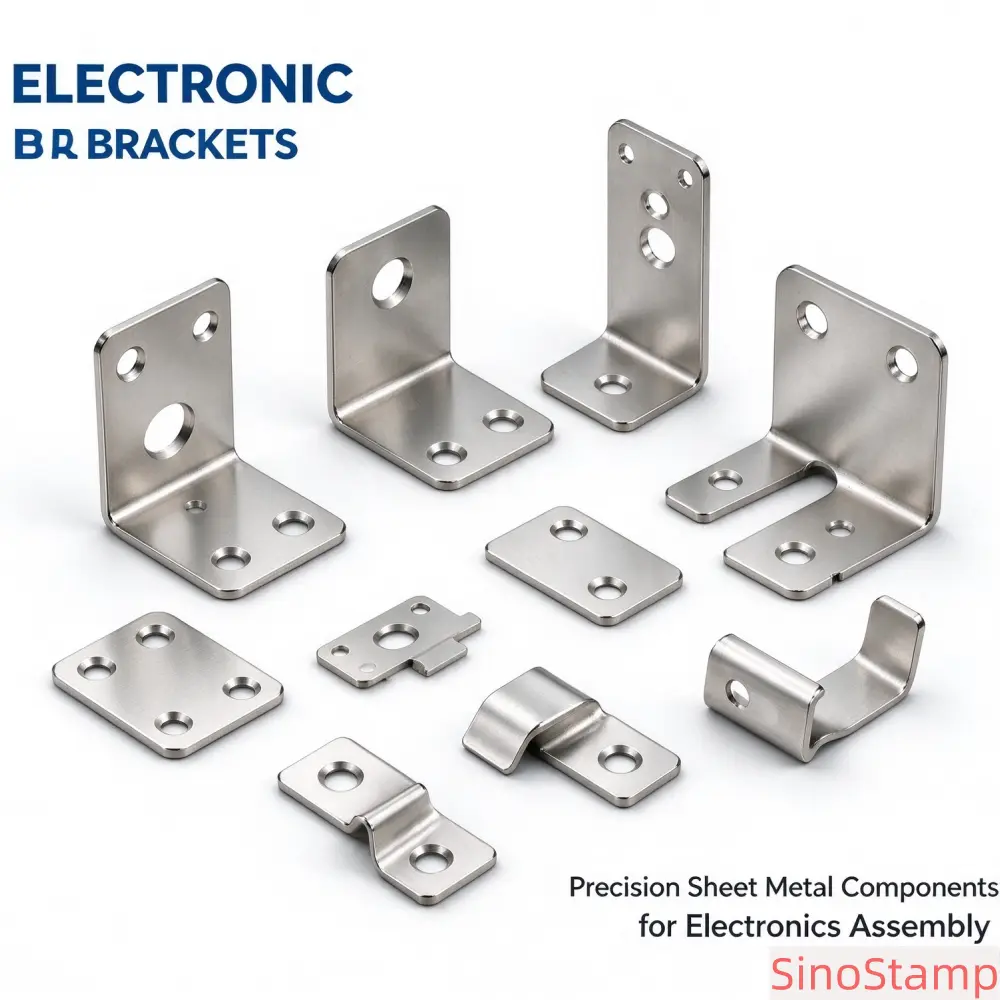
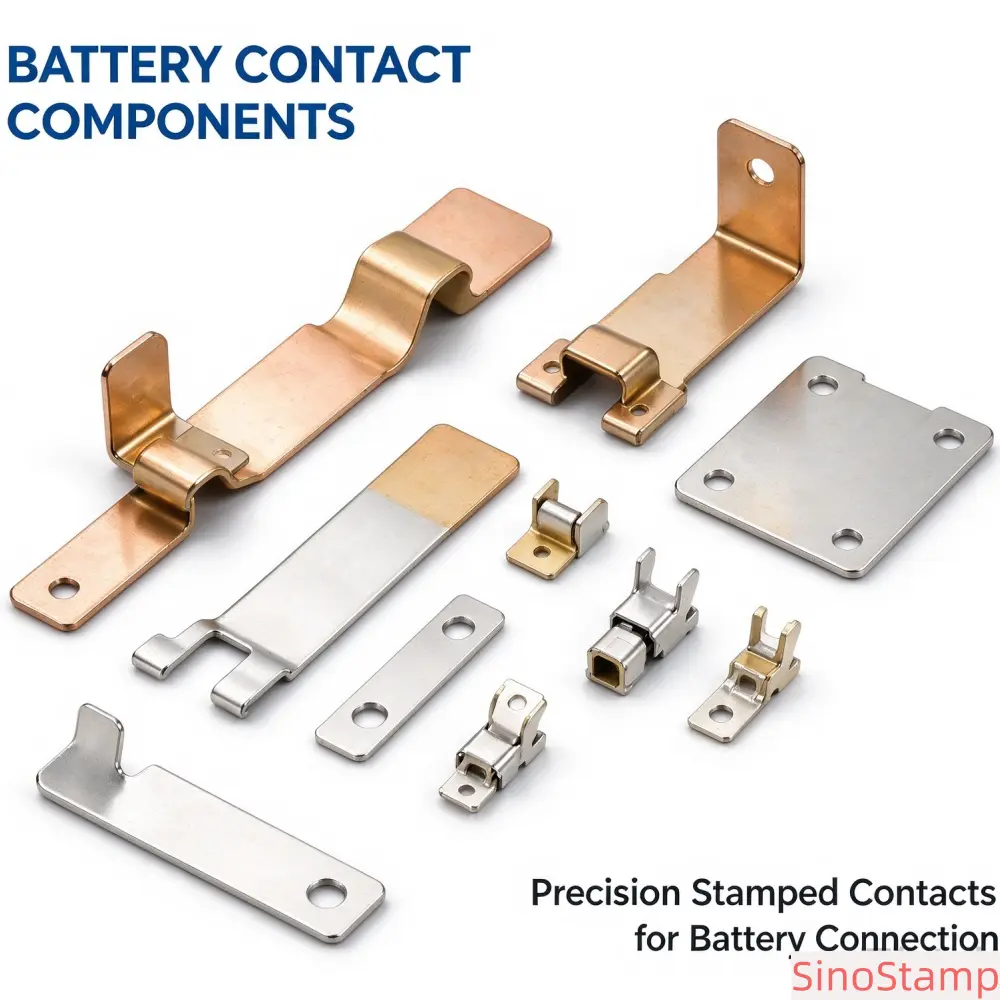
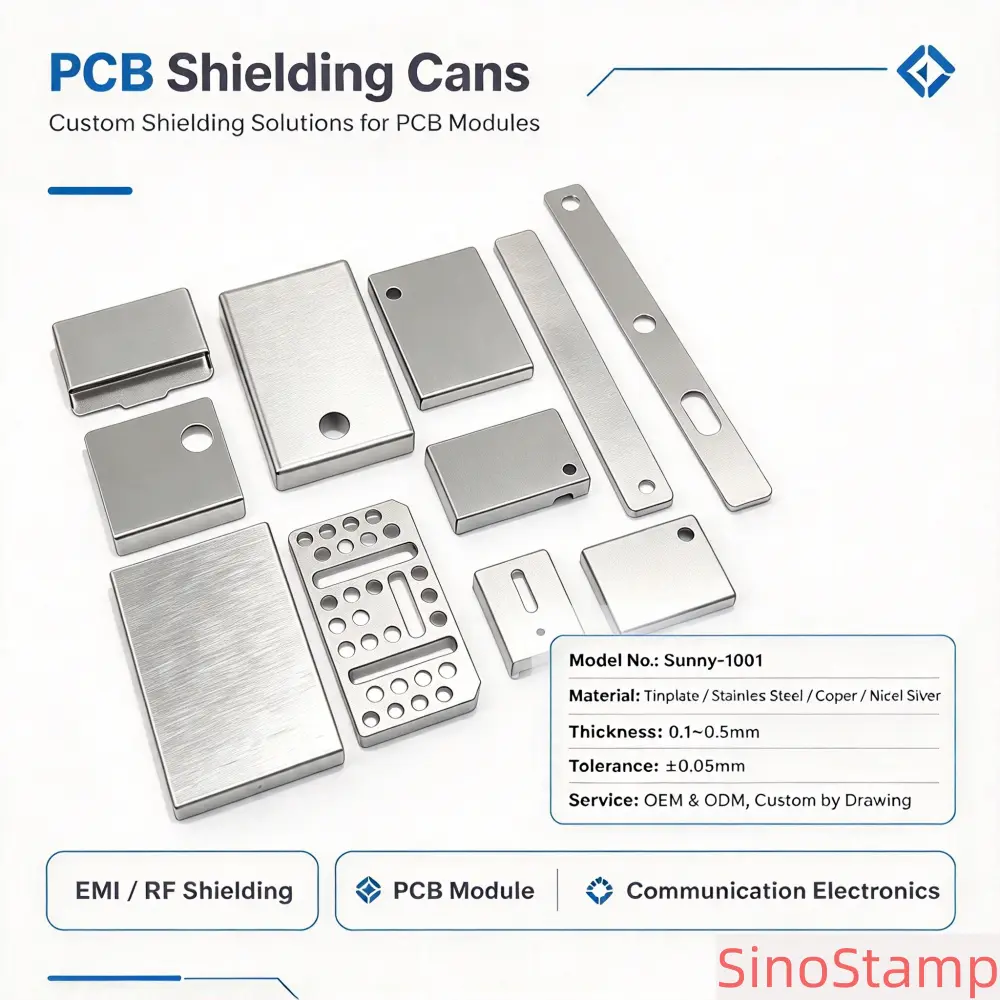
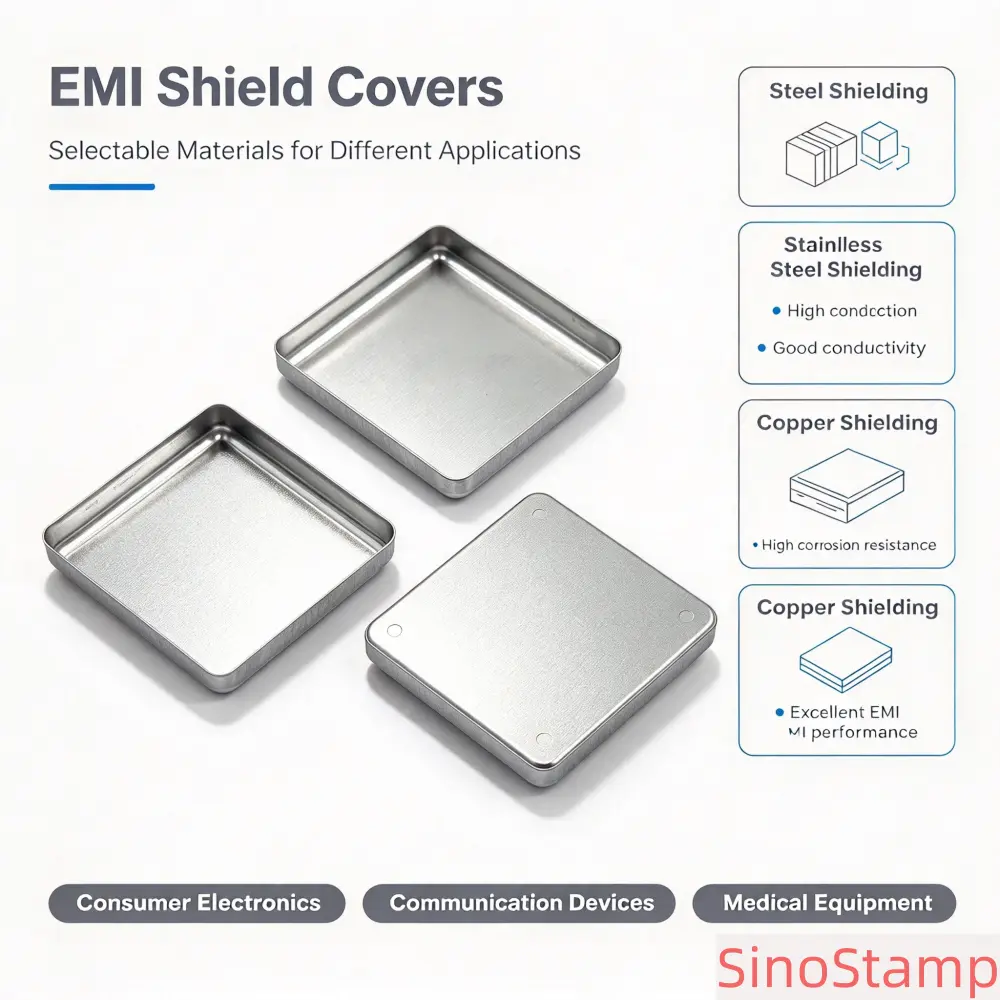
Electronic applications commonly require small, accurately formed metal components. Examples include EMI shielding covers, PCB shielding cans, electronic brackets, battery contact components, and spring contacts.
These parts may require thin-gauge materials, precise cutouts, controlled forming, and suitable surface finishes. For shielding applications, performance also depends on grounding, installation, contact continuity, and the complete product assembly.
Electrical Metal Stamping Parts
Electrical applications often use stamped copper, brass, and other conductive metal components. Typical products include copper terminals, electrical contacts, connector terminals, and switch contacts.
Material conductivity, contact geometry, plating specifications, and dimensional consistency are important considerations. Depending on the application, the manufacturer may also need to support secondary operations and functional inspection.
Home Appliance Metal Stamping Parts
Home appliances use a wide range of structural and functional stamped metal components. These may include mounting brackets, internal support plates, metal frames, motor mounting components, and fastening clips.
Such parts may require strength, dimensional stability, corrosion protection, and compatibility with the appliance's assembly process.
When selecting a supplier, buyers should look for relevant experience in the product category rather than assuming that all metal stamping manufacturers have the same capabilities.
Final Checklist: How to Select the Right Metal Stamping Manufacturer
Before confirming a supplier, use the following checklist to review the most important aspects of the project:
- Does the manufacturer have relevant experience with similar stamped components?
- Does it have suitable stamping equipment and production processes?
- Can it develop and maintain the required stamping dies?
- Can it source the specified materials and provide supporting documentation?
- Can it meet the critical dimensional and tolerance requirements?
- Does it have a documented quality inspection process?
- Can it provide the required surface finishing and secondary operations?
- Can it support your sample quantity and expected production volume?
- Is the quotation transparent about tooling, processing, finishing, and packaging costs?
- Can it provide realistic sample and production lead times?
- Are tooling ownership and maintenance responsibilities clearly defined?
- Can it support repeat orders and long-term OEM cooperation?
Not every supplier needs to offer every service internally. Some manufacturers work with qualified external partners for plating, heat treatment, or specialized testing. What matters is whether the supplier can manage the complete production process, maintain agreed specifications, and take responsibility for the quality of the delivered components.
Conclusion: Choose a Manufacturing Partner, Not Just a Low-Cost Supplier
Choosing a reliable metal stamping manufacturer in China requires more than comparing quotations. OEM buyers should evaluate production capabilities, tooling experience, material knowledge, dimensional control, quality management, surface finishing, MOQ flexibility, sample development, and long-term supply arrangements.
A good manufacturing partner should understand your technical requirements, communicate production risks clearly, and provide a realistic manufacturing solution. It should also be able to support the project from initial sample development through regular production and repeat orders.
For small and medium-sized OEM companies, finding a supplier that combines engineering support, flexible production, consistent quality, and reliable communication can make a significant difference to the success of a sourcing project.
About SinoStamp
SinoStamp is a China-based metal stamping supplier focused on custom metal components for OEM and industrial applications. Our product scope includes electronic metal stamping parts, electrical metal stamping parts, and home appliance metal stamping parts.
We support customized manufacturing based on customer drawings, samples, and technical specifications. Depending on project requirements, our services can cover material evaluation, stamping process selection, tooling development coordination, precision stamping, surface finishing coordination, sample production, and quality inspection.
Our goal is to help international OEM customers develop practical and reliable metal component sourcing solutions, from initial project evaluation to repeat production.
Whether you are sourcing EMI shielding covers, PCB shielding cans, copper terminals, electrical contacts, appliance brackets, or other custom stamped components, we welcome your technical drawings and project requirements for evaluation.
When contacting SinoStamp, please include your component drawings, material specifications, estimated order quantity, surface finishing requirements, and target application. This information will help us review your project and provide more relevant manufacturing recommendations.
```